
- Flesh and Blood TCG is a NZ-made, face-to-face trading card game where every card can attack, block, or generate resources — creating deep strategic decisions each turn.
- Classic Constructed decks are exactly 80 cards built around a hero class; pitch value (red/yellow/blue) shapes your resource curve and deck cycling strategy.
- Pitch stacking and matchup awareness are the skills that most separate intermediate players from competitive ones.
- The 2026 NZ competitive season includes nationwide Pro Quest events and a National Championship in Wellington (19–21 June), with a World Championship invitation on the line.
- Silver Age format (launched February 2026) offers a more accessible entry point with a restricted, rotating card pool — ideal for newer players.
Whether you’re cracking your first booster pack or eyeing a seat at the 2026 New Zealand National Championship, this guide has you covered. Flesh and Blood TCG is a tactical, resource-driven trading card game built for face-to-face play — and as a New Zealand creation, it holds a special place in our local card-game scene. Read on to learn the rules, master deck construction, sharpen your strategy, and find out where to compete right here in Aotearoa.
What Is Flesh and Blood TCG?
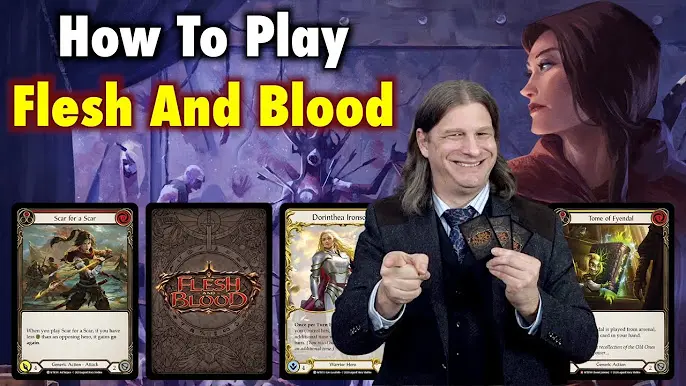
Flesh and Blood (commonly abbreviated FaB) is a trading card game designed by James White and published by Legend Story Studios, a New Zealand company based in Auckland. Released in 2019, the game was built from the ground up as a physical, in-person experience — a deliberate counterpoint to the growing dominance of digital and online-first TCGs.
At its heart, FaB is a one-on-one combat game in which each player chooses a hero card representing a fantasy archetype — Warrior, Ninja, Illusionist, Guardian, Ranger, and many more. You build a customised deck around that hero, then battle to reduce your opponent’s life total to zero. Every card in your hand can serve multiple roles: attack your opponent, defend against their strikes, or pitch it for resources to fuel bigger plays. That triple-use design is what gives FaB its remarkable tactical depth.
The game has earned a strong following among competitive players who appreciate its low variance, meaningful decision-making, and the way it rewards preparation and matchup knowledge. If you enjoy deep strategy games, you might also want to explore our ultimate guide for TCG players to see how FaB fits alongside other leading card games.
How to Play Flesh and Blood TCG — Step by Step
New to the game? Here is how a standard game of Flesh and Blood plays out from setup to finish.
- Choose your hero. Each player selects a hero card and places it in the hero zone. Your hero determines which class cards you can include in your deck, your starting life total (usually 20–40 depending on the hero), and any passive abilities.
- Set up weapons and equipment. Place your hero’s weapon(s) in the weapon zone and equip up to four pieces of armour (head, chest, arms, legs) face-down in the equipment zone.
- Shuffle and draw. Shuffle your deck and draw your opening hand of four cards. There is no formal mulligan in most formats.
- Take turns. Players alternate taking turns. On your turn you move through three phases: Start Phase (trigger any start-of-turn effects), Action Phase (play cards, attack, activate abilities), and End Phase (discard your hand, draw four new cards).
- Pitch cards for resources. To play cards that cost resources, pitch other cards from your hand face-up into the pitch zone. Cards have a pitch value of 1 (red), 2 (yellow), or 3 (blue) shown in the top-left corner.
- Resolve attacks and blocks. When you play an attack action, your opponent may defend using cards from their hand or by popping equipment. After defence is declared, both players may play instants and activations before the attack resolves.
- Track damage. Any unblocked damage reduces the defending hero’s life total. On-hit effects trigger only if at least 1 damage is dealt.
- Cycle your deck. In Classic Constructed, pitched cards go to the bottom of your deck in the order they were played, allowing strategic pitch stacking across multiple deck cycles.
- Win the game. The first player to reduce their opponent’s life total to zero wins. If a player is required to draw a card but cannot, they lose.
Understanding the Card System
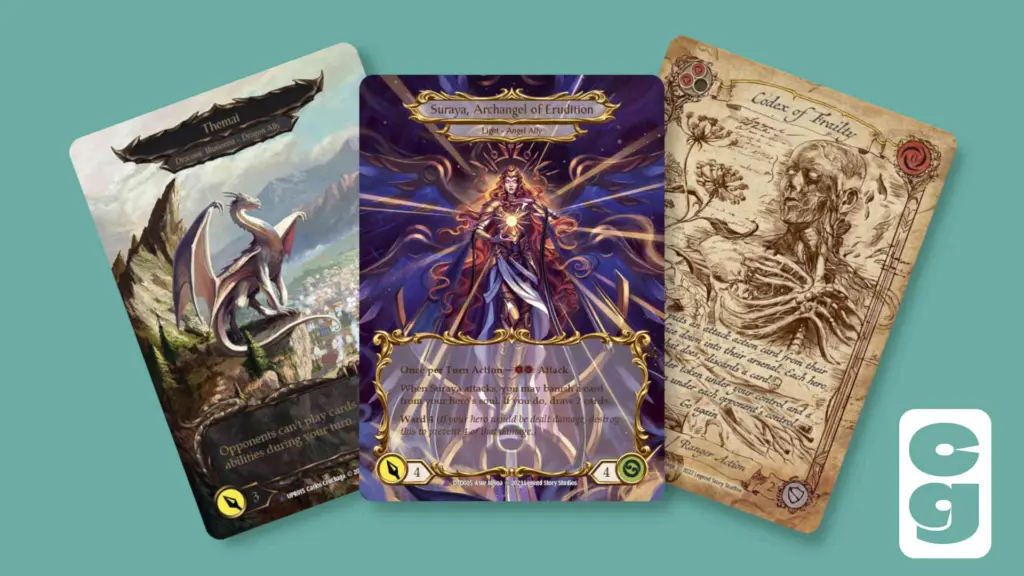
FaB’s card design is what separates it from most TCGs. Grasping a few key concepts early will fast-track your improvement significantly.
Pitch Values
Every non-equipment card has a pitch value indicated by the colour of the card’s border stripe: red (1 resource), yellow (2 resources), and blue (3 resources). Most decks include multiple copies of key cards at different pitch values, letting you choose between playing a card for its effect or pitching it cheaply or expensively depending on what the turn demands.
Card Types
- Action cards — attacks and non-attack actions you play on your turn.
- Instant cards — reactions playable on either player’s turn during an attack sequence.
- Defence reactions — played specifically to defend against attacks.
- Equipment — armour pieces that block damage once before being destroyed.
- Tokens and auras — persistent cards that sit in play and create ongoing effects.
Keyword Abilities
FaB is rich in keywords. Go again allows you to play another action after this one. Dominate prevents the defender from using more than one card to block. Intimidate forces the opponent to banish a random card from hand. Learning which keywords your hero produces — and which ones threaten you — is central to competitive play.
Building a Competitive Deck
Deck construction in FaB is tightly linked to your hero. In the most popular tournament format, Classic Constructed, decks contain exactly 80 cards (not counting the hero, weapons, and equipment). You may include up to three copies of any card, and cards must match your hero’s class or be generic.
A well-built deck balances several elements:
- Pitch curve — the ratio of red, yellow, and blue cards shapes how many resources you generate each turn. Heavy blue decks are resource-rich but can feel slow; heavy red decks are aggressive but may struggle to fund expensive actions.
- Attack density — enough attack actions to maintain consistent pressure across the whole game.
- Defence coverage — defence reactions and high-block cards to survive opposing burst turns.
- Equipment choices — armour is a limited but powerful resource; selecting pieces with block value and useful on-pop abilities matters greatly.
Core sets such as Welcome to Rathe and Arcane Rising provide foundational generic and class cards that remain staples across many hero builds. Class-specific sets are equally important — for example, Illusionist players building Prism or Dromai will find essential cards in Monarch and Uprising. Knowing which sets supply your hero avoids costly, unnecessary purchases. For broader collecting advice, check out our guide on navigating the NZ TCG collector market.
Strategy Tips for Every Level
Fundamentals
The single most important decision in FaB is when to block and when to take the damage. Over-blocking depletes your hand and limits your next offensive turn, while under-blocking lets opponents snowball dangerous on-hit effects. A good rule of thumb: block only when the damage would meaningfully shift the game state or trigger a dangerous ability.
Pitch stacking — deliberately ordering which cards go to the bottom of your deck when pitched — is a skill that separates good players from great ones. In Classic Constructed, your deck eventually cycles, so engineering a strong second (or third) pass of superior cards can decide long games.
Matchup Awareness
Against aggressive heroes like Fai or Katsu, prioritise preserving equipment and blocking efficient attacks that generate chain links. Against control-oriented heroes such as Oldhim, apply steady pressure to force resource expenditure rather than letting them dictate a slow, grinding pace. Recognising your opponent’s archetype in the first few turns lets you adjust your blocking thresholds and offensive sequencing accordingly.
Advanced Techniques
At higher levels, on-hit sequencing becomes decisive. Cards like Command and Conquer destroy opponent equipment on hit, so baiting out blocks with smaller attacks first makes the critical swing land more reliably. Fatigue strategies — deliberately managing your deck cycles to outlast a faster opponent — require meticulous tracking of pitched cards and demand the kind of strong focus and sustained concentration that top-level competition demands across multiple rounds.
FaB Formats Compared
| Format | Deck Size | Card Pool | Best For |
|---|---|---|---|
| Classic Constructed | 80 cards + equipment | All legal sets | Competitive & tournament play |
| Booster Draft | ~30 cards + equipment | Draft from packs on the day | Limited format events & Nationals |
| Sealed Deck | ~30 cards + equipment | Six booster packs | Entry-level competitive events |
| Silver Age | 80 cards + equipment | Recent sets only (rotates) | Fresh entry point from 2026 |
| Blitz | 40 cards + equipment | All legal sets | Casual & introductory play |
The 2026 NZ Competitive Scene
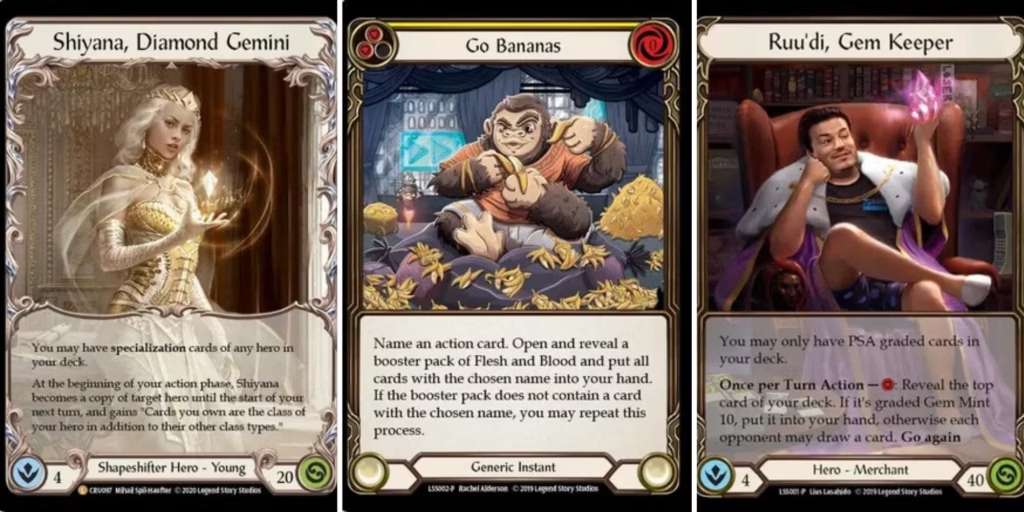
As the home country of Legend Story Studios, New Zealand holds a prestigious position in the global FaB community, and the 2026 competitive calendar reflects that.
National Championship 2026 — Wellington
The 2026 New Zealand National Championship is scheduled for 19–21 June 2026, hosted by Card Merchant Wellington at 1/49 Manners Street, Te Aro. The event is capped at 112 players and features a mixed format of Classic Constructed and Booster Draft using the Compendium of Rathe set. The champion earns an exclusive Gold Foil card and a direct invitation to the 2026 World Championship — a prize well worth the grind.
Road to Nationals and Pro Quest Events
Throughout the first half of 2026, qualifying events are held at local game stores nationwide. Key venues include Hobby Lords in Lower Hutt, Card Merchant in Christchurch, and Vagabond Games in Auckland. Entry fees typically sit between $30 and $60 NZD and often include participation packs and exclusive promos such as the Cold Foil In the Palm of Your Hand. These events are an excellent proving ground and a great way to meet the FaB community before the big dance in Wellington.
Silver Age — A New Entry Point in 2026
From February 2026, Legend Story Studios officially launched the Silver Age format, which restricts the card pool to more recent sets. This gives newer players a more accessible on-ramp into competitive play without needing a full collection of older staples, and gives the meta a fresh shape that rewards up-to-date set knowledge. It’s a brilliant move for growing the game further here in NZ.
Buying FaB Cards in New Zealand
Purchasing wisely can save you a lot of coin. Here are the key things to know before you spend.
- Buy singles first. Cracking packs is fun, but if you want specific cards for a particular hero, purchasing singles from local stores or online vendors is far more cost-effective.
- Start with a Welcome to Rathe or Outsiders starter deck to learn the fundamentals before investing in singles.
- Identify your hero’s key sets. Guardian players need Welcome to Rathe and Crucible of War; Illusionist players should focus on Monarch and Uprising. Buying outside your hero’s core sets wastes budget.
- Foils are cosmetic only. Cold foil and rainbow foil cards look stunning but provide zero gameplay advantage. Competitive play is perfectly achievable with standard border cards.
- Check set legality for your target format before purchasing, especially now that Silver Age rotation is in effect.
If you’re building a collection across multiple TCGs, our guide to Pokémon TCG in NZ offers useful buying strategies that translate well to FaB, and our broader TCG player guide covers collection management across the hobby. It’s also worth noting that FaB’s multi-use card design — where every card does double or triple duty — shares a philosophical DNA with other games that reward creative thinking; if you’re curious how different mechanics shape entirely different games, you might learn more about the Korean version of Uno at uno-rule.com as an interesting contrast in game design philosophy.
Frequently asked questions
Is Flesh and Blood TCG good for beginners?
Yes, especially with the right entry point. The Blitz format uses smaller 40-card decks and is designed as an introductory experience. Pre-built starter decks are also available for most hero classes. The core mechanics — pitch, attack, block — are straightforward to learn, though mastering them takes time and rewarding practice.
How many cards do you need for a Classic Constructed deck?
A Classic Constructed deck requires exactly 80 cards, not counting your hero card, weapons, and equipment pieces. You may include up to three copies of any single card. Equipment slots cover head, chest, arms, and legs, giving you up to four additional cards in your setup zone at the start of the game.
What is pitch stacking and why does it matter?
Pitch stacking is the practice of deliberately ordering the cards you pitch to the bottom of your deck so that your later deck cycles contain a higher concentration of powerful cards. Because Classic Constructed decks cycle over a long game, engineering those future hands can be as impactful as any single turn decision — it’s one of FaB’s most skill-intensive mechanics.
Where can I play Flesh and Blood competitively in New Zealand?
Local game stores nationwide run regular Pro Quest and Road to Nationals events, including Hobby Lords (Lower Hutt), Card Merchant (Wellington and Christchurch), and Vagabond Games (Auckland). The pinnacle of the local season is the NZ National Championship held annually, with the 2026 edition in Wellington on 19–21 June.
What is the Silver Age format?
Silver Age is a rotating format launched by Legend Story Studios in early 2026 that limits the legal card pool to more recent sets. It provides a more accessible and regularly refreshed competitive environment, making it ideal for newer players who don’t yet have access to older staple cards from the earliest FaB sets.
