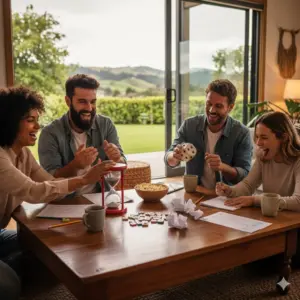


The world of 2 player card games offers a diverse range of entertainment that caters to both casual social interaction and intense strategic competition. This article explores the best 2 player card games available in New Zealand, ranging from traditional classics like Rummy and Gin to modern tactical experiences. We examine the rules, optimal strategies, and the cultural significance of these games within the local gaming community. Readers will find practical advice on deck selection, hand management techniques, and how to adapt playstyles for head-to-head encounters. Whether you are looking for a quick five-minute round or a complex evening of skill-based play, this guide provides the actionable insights needed to master the art of dual-player card gaming.
Understanding the appeal of 2 player card games in New Zealand
Two player card games have seen a massive resurgence across New Zealand as people seek more personal and engaging ways to spend their downtime. Unlike larger group games, 2 player card games allow for a deeper level of psychological engagement and tactical back and forth between opponents. The intimacy of a two-person setup means that players can focus entirely on the tendencies and tells of their single adversary, creating a competitive environment that is both rewarding and mentally stimulating. This format is particularly popular in local cafes and homes because it requires minimal space and can be started or stopped with ease. Many Kiwis appreciate the portability of a standard deck, making these games a staple for travel or quiet nights in.
- High level of player interaction and psychological depth +1
- Low barrier to entry requiring only a standard 52 card deck
- Portable nature makes them ideal for New Zealand outdoor lifestyles
- Fast paced gameplay loops that fit into busy modern schedules
High level of player interaction and psychological depth
Low barrier to entry requiring only a standard 52 card deck
Portable nature makes them ideal for New Zealand outdoor lifestyles
Fast paced gameplay loops that fit into busy modern schedules
| Benefit | Description |
|---|---|
| Focus | Players can track every card played by their sole opponent |
| Speed | Rounds often conclude in under ten minutes |
| Flexibility | Rules are easily modified for house play |
| Cost | Most games utilize a standard, affordable deck |
Selecting the right deck for your match
Choosing the appropriate deck is the first step in ensuring a high quality gaming experience. While a standard deck of cards is the most versatile option, the physical quality of the cards can impact the ease of shuffling and dealing during 2 player card games. Plastic-coated cards are often preferred for their durability, especially if playing in social settings where spills might occur. For competitive players, the "snap" and "glide" of the cards are essential for maintaining a fast tempo during play.
Mastering the basics of Gin Rummy for two
Gin Rummy stands as one of the most prestigious 2 player card games due to its perfect balance of luck and calculated risk. In this game, players aim to form sets and runs while minimizing the point value of unmatched cards, known as deadwood. The tension in Gin Rummy arises from the decision of when to "knock" or whether to hold out for a complete "Gin." For New Zealand players, this game offers a sophisticated way to test memory and probability skills. The discard pile becomes a graveyard of information, where every card picked up or passed over provides a clue about the opponent's hand. Mastering the timing of the end-game is what separates casual players from seasoned experts in this classic format.
- Objective is to form melds of three or more cards +1
- Players draw from the stock or the discard pile each turn
- Knocking is allowed when deadwood totals ten points or less
- A "Gin" bonus is awarded for having zero deadwood points
Objective is to form melds of three or more cards
Players draw from the stock or the discard pile each turn
Knocking is allowed when deadwood totals ten points or less
A "Gin" bonus is awarded for having zero deadwood points
| Rule Component | Detail |
|---|---|
| Deck Size | Standard 52 card deck (no jokers) |
| Card Values | Face cards 10, Aces 1, others at face value |
| Hand Size | Each player is dealt 10 cards |
| Winning | Usually played to 100 or 250 points |
Effective discard strategies in Gin Rummy
A common mistake in 2 player card games like Gin Rummy is discarding cards that are too "live," meaning they are likely to help the opponent. Skilled players observe which suits the opponent is avoiding and use that information to safely dump their own deadwood. If an opponent picks up a seven of hearts, you must be extremely cautious about discarding adjacent hearts or other sevens.
The strategic depth of 2 player card games like Cribbage
Cribbage is a unique entry among 2 player card games, utilizing a distinct board and pegs for scoring rather than traditional pen and paper. It involves a "crib" or an extra hand for the dealer, which adds a layer of defensive strategy to the initial discard phase. Players must decide which two cards to surrender to the crib, often balancing their own scoring potential against the risk of giving the dealer a massive advantage. The "pegging" phase, where players play cards alternately to reach a total of 31, requires quick mental arithmetic and the ability to anticipate the opponent’s remaining cards. This game has a dedicated following in New Zealand clubs and pubs, often passed down through generations.
- Unique scoring board uses pegs to track progress to 121 points +1
- The dealer receives a "crib" hand composed of discards from both players
- Combinations like pairs, runs, and "15s" provide scoring opportunities
- The "Go" rule penalizes players unable to play without exceeding 31
Unique scoring board uses pegs to track progress to 121 points
The dealer receives a "crib" hand composed of discards from both players
Combinations like pairs, runs, and "15s" provide scoring opportunities
The "Go" rule penalizes players unable to play without exceeding 31
| Scoring Event | Points Awarded |
|---|---|
| Fifteen-Two | 2 Points |
| Pair | 2 Points |
| Run of Three | 3 Points |
| His Heels (Jack turned up) | 2 Points |

Calculating probabilities during the pegging phase
During the pegging phase of 2 player card games, understanding the "count" is vital. If you play a ten, and your opponent plays a five to make fifteen, they score two points. To counter this, experienced players often lead with cards lower than five to prevent an immediate "fifteen-two." Managing your hand to ensure you have a "last card" point is also a subtle but effective way to chip away at the opponent's lead.
Speed and reaction in 2 player card games
For those who prefer adrenaline over slow deliberation, 2 player card games like Speed or Spit are the go-to choices. These games do not follow a turn-based structure; instead, both players act simultaneously to get rid of their cards as fast as possible. This format tests hand-eye coordination and peripheral vision, as you must monitor both your own piles and the center stacks. In the New Zealand context, Speed is often a favorite among younger players or as a warm-up before more serious games. The intensity of these matches is high, often leading to frantic but fun sessions where the physical speed of the player is just as important as their card knowledge.
- Simultaneous play removes the traditional turn-taking mechanic +1
- Players build on center piles in ascending or descending order
- The first player to deplete their entire card supply wins
- Reflexes and mental processing speed are the primary skills tested
Simultaneous play removes the traditional turn-taking mechanic
Players build on center piles in ascending or descending order
The first player to deplete their entire card supply wins
Reflexes and mental processing speed are the primary skills tested
| Game Phase | Action |
|---|---|
| Setup | Cards divided equally into layout and draw piles |
| Start | Both players flip a card into the center at once |
| Play | Match cards regardless of suit |
| Stagnation | If no moves are possible, flip new cards from side piles |
Improving your reaction time for fast games
In rapid 2 player card games, the layout of your cards is crucial. Keeping your "active" piles organized allows your eyes to scan the options faster. Many top players recommend using both hands—one for drawing and one for playing—to maximize efficiency. Maintaining a calm focus despite the chaotic nature of the game helps in spotting sequences that the opponent might miss.
The classic duel of 2 player card games with War
War is perhaps the simplest of all 2 player card games, often serving as the first introduction to cards for children. It is a game of pure luck where the deck is split evenly and players simultaneously reveal the top card of their stack. The higher card wins both and adds them to the bottom of the winner's pile. While it lacks the complex strategy of other titles, its simplicity makes it an accessible way to pass the time. In New Zealand, the game is frequently used to teach basic number comparisons. Despite the lack of agency, the excitement of a "War"—where cards of equal value lead to a high-stakes tiebreaker—remains a timeless draw for many.
- Requires no complex decision-making or strategic planning +1
- Ideal for teaching card values and hierarchy to beginners
- A "War" occurs when both players flip identical card ranks
- Matches can last a long time depending on the distribution of the deck
Requires no complex decision-making or strategic planning
Ideal for teaching card values and hierarchy to beginners
A "War" occurs when both players flip identical card ranks
Matches can last a long time depending on the distribution of the deck
| Outcome | Rule |
|---|---|
| Higher Card | Takes both played cards |
| Tie (War) | Three face-down cards, one face-up to decide |
| Winning | Capturing all 52 cards in the deck |
| Duration | Can range from 5 minutes to over half an hour |
Variations to increase engagement in War
To add a layer of choice to this simple 2 player card game, some house rules allow players to hold a "hand" of three cards and choose which one to play each turn. This minor change introduces a tactical element of when to burn low cards and when to deploy your aces. Such variations can make the game more appealing to older audiences while maintaining the core loop of the original.
Blackjack as a competitive 2 player card game
While often associated with casinos, Blackjack can be adapted into one of the most compelling 2 player card games for home play. In a head-to-head scenario, one player acts as the dealer while the other is the player, with roles rotating after a set number of rounds. This setup introduces a different dynamic than the casino version, as the dealer must follow strict house rules while the player has the freedom to take risks. The focus shifts to bankroll management and understanding the mathematical probability of "busting." In New Zealand, social Blackjack is a common way to enjoy a competitive evening without the pressures of a commercial environment.
- Goal is to get as close to 21 as possible without going over +1
- Players must decide whether to "Hit" or "Stand" based on visible cards
- Rotating the dealer role ensures fairness over multiple rounds
- Betting with tokens or chips adds a layer of psychological pressure
Goal is to get as close to 21 as possible without going over
Players must decide whether to "Hit" or "Stand" based on visible cards
Rotating the dealer role ensures fairness over multiple rounds
Betting with tokens or chips adds a layer of psychological pressure
| Hand Value | Action Recommendation |
|---|---|
| 8 or less | Always Hit |
| 11 | Always Double Down (if rules allow) |
| 17 or more | Always Stand |
| 12 to 16 | Stand if dealer shows low cards (2 to 6) |
The importance of position and dealer rules
In 2 player card games based on Blackjack, the dealer's obligation to hit on 16 and stand on 17 is the player's primary advantage. By understanding these constraints, the player can make more informed decisions about when to stay on a weak hand, hoping the dealer will eventually bust. Read more in Wikipedia.
Exploration of trick taking 2 player card games like German Whist
German Whist is an ingenious adaptation of traditional Whist designed specifically for two. It is divided into two distinct halves: the first half is for "building" a strong hand, while the second half is where the actual tricks are won to determine the score. This structure makes it one of the most mentally taxing 2 player card games, as you must remember which cards your opponent has collected in the first phase to succeed in the second. It requires a high degree of card counting and foresight. For New Zealand enthusiasts, German Whist represents the "thinking person's" card game, offering a level of complexity usually reserved for four-player games like Bridge.
- The first 13 cards are played to determine which cards players add to their hand +1
- The remaining 13 cards are played in a standard trick-taking format
- Suit following is mandatory, making the management of "voids" crucial
- Memory is the most valuable asset in the second phase of the game
The first 13 cards are played to determine which cards players add to their hand
The remaining 13 cards are played in a standard trick-taking format
Suit following is mandatory, making the management of "voids" crucial
Memory is the most valuable asset in the second phase of the game
| Game Phase | Goal |
|---|---|
| Phase One | Win tricks to claim high-value face-up cards |
| Phase Two | Win the majority of the 13 tricks to score |
| Strategy | Sometimes it is better to lose a trick to avoid a bad card |
| Trump | The first card flipped from the deck determines the trump suit |

Card counting techniques for German Whist
In elite 2 player card games, card counting isn't about cheating; it's about tracking the 52 cards to narrow down what the opponent holds. In German Whist, since you see every card that goes into your opponent's hand during the first half, the second half should theoretically be played with "open" information if your memory is sharp enough. This turns the game into a pure puzzle of card sequencing.
Mental benefits of engaging in 2 player card games
Participating in 2 player card games offers significant cognitive benefits that extend beyond simple entertainment. These games require the use of short-term memory, strategic planning, and arithmetic, which can help keep the mind sharp across all age groups. In New Zealand, many community groups encourage card games as a way to promote social bonding and mental well-being. The competitive yet friendly nature of these interactions helps reduce stress and provides a sense of accomplishment. Furthermore, the need to read an opponent's body language and predict their moves enhances emotional intelligence and social awareness.
- Stimulates memory through tracking cards and discard piles +1
- Encourages logical thinking and the development of complex strategies
- Provides a low-cost social activity that fosters deep connections
- Helps maintain mental agility and focus in older adults
Stimulates memory through tracking cards and discard piles
Encourages logical thinking and the development of complex strategies
Provides a low-cost social activity that fosters deep connections
Helps maintain mental agility and focus in older adults
| Cognitive Skill | Game Example |
|---|---|
| Memory | German Whist, Gin Rummy |
| Arithmetic | Cribbage, Blackjack |
| Reflexes | Speed, Spit |
| Probability | Poker, Gin Rummy |
Card games as a tool for social connection
The structure of 2 player card games naturally encourages conversation. Unlike digital entertainment, there is a physical presence and a shared tactile experience that builds rapport between players. This makes card games an excellent "icebreaker" or a way for long-time friends to engage in a shared hobby that evolves over years of play.
Adapting 2 player card games for travel and outdoor play
New Zealanders are known for their love of the outdoors, and 2 player card games are the perfect companion for camping trips or beach outings. However, playing in these environments requires some adaptation. Wind can be a major factor, so using weighted cards or magnetic sets can prevent a game from being interrupted. Additionally, choosing games that don't require a large table surface, like certain variations of Poker or simplified Rummy, makes playing on a picnic blanket or in a tent much easier. The durability of the cards is also paramount, with many Kiwis opting for 100% plastic cards that can be wiped clean after exposure to sand or salt air.
- Use plastic cards to resist moisture and wear in outdoor settings +1
- Select games with a small "footprint" for limited spaces like tents
- Consider travel-sized Cribbage boards with locking pegs
- Avoid games with too many components that can be lost in the grass
Use plastic cards to resist moisture and wear in outdoor settings
Select games with a small "footprint" for limited spaces like tents
Consider travel-sized Cribbage boards with locking pegs
Avoid games with too many components that can be lost in the grass
| Environment | Recommended Gear |
|---|---|
| Beach | Waterproof plastic cards |
| Hiking/Tramping | Miniature card deck to save weight |
| Cafe | Standard deck with a card holder |
| Home | Premium linen-finish cards |
Keeping the game going in any weather
Part of the charm of 2 player card games is their resilience. Even if the weather turns, a deck of cards provides hours of entertainment without the need for electricity or internet. For many New Zealanders, a "rainy day" deck is a mandatory part of any holiday packing list, ensuring that the competitive spirit remains high regardless of the conditions outside.
Etiquette and sportsmanship in competitive play
While the goal of most 2 player card games is to win, maintaining proper etiquette is essential for a positive experience. This includes shuffling fairly, dealing clearly, and avoiding "slow rolling" or excessive celebration. In the New Zealand gaming culture, there is a strong emphasis on "fair play" and the "good sport" mentality. Respecting the rules and the opponent creates an environment where both players can improve their skills. Additionally, being a gracious loser is just as important as being a humble winner, as the primary value of these games lies in the challenge and the company rather than just the final score.
- Always allow the opponent to cut the deck after shuffling +1
- Announce scores clearly and give the opponent time to verify
- Avoid looking at the opponent's cards or using "table talk" to distract
- Maintain a consistent pace of play to keep the game engaging
Always allow the opponent to cut the deck after shuffling
Announce scores clearly and give the opponent time to verify
Avoid looking at the opponent's cards or using "table talk" to distract
Maintain a consistent pace of play to keep the game engaging
| Do | Don’t |
|---|---|
| Keep cards above the table | Hide cards or “peek” |
| Respect house rules | Argue over established mechanics |
| Offer a rematch | Gloat after a victory |
| Handle cards gently | Bend or mark the cards |
The role of house rules in local play
One of the best aspects of 2 player card games is their flexibility. Many New Zealand families have "house rules" that have been passed down for decades. Before starting a game with a new opponent, it is always a good idea to clarify these rules—such as whether an Ace is high or low, or if certain cards have special scoring properties—to ensure a smooth and fair match for both parties.
Final thoughts
The enduring popularity of 2 player card games in New Zealand is a testament to their versatility and depth. From the high-speed reflexes of Speed to the calculated maneuvers of German Whist, these games provide a unique blend of mental challenge and social interaction. By choosing the right game for the occasion and mastering the fundamental strategies, players can turn a simple deck of cards into a source of endless entertainment. As we have explored, the benefits of these games extend far beyond the table, offering cognitive stimulation and a way to build lasting connections with others. Whether at home, in a cafe, or out in the New Zealand wilderness, 2 player card games remain a quintessential part of the local social fabric.
FAQ
What are the best 2 player card games for beginners?
Games like War and Speed are excellent for beginners because they have simple rules and require very little setup. These games focus more on basic card recognition and quick reactions rather than complex long-term strategy, making them accessible to all ages.
Can I play poker with only two people?
Yes, this is known as "Heads-Up" Poker. It is a highly strategic version of the game where players must be much more aggressive, as they are involved in every single hand. It is a great way to practice reading opponents and understanding betting patterns.
How long does a typical game of Gin Rummy take?
A single hand of Gin Rummy usually takes about five to ten minutes. However, matches are often played to a set score like 100 points, which can involve multiple hands and take thirty minutes to an hour to complete.
Do I need a special deck for Cribbage?
While you can play the card portion of Cribbage with a standard 52-card deck, you will need a Cribbage board and pegs to track the score properly. Some people use pen and paper, but the board is part of the traditional experience.
What is the most skill based 2 player card game?
Many enthusiasts consider German Whist or Gin Rummy to be the most skill-based. These games require significant memory work, probability calculation, and the ability to adapt to the opponent's strategy over the course of the match.
Are there any 2 player card games that use jokers?
Most traditional 2 player card games like Gin Rummy and Cribbage do not use jokers. However, some variations of Rummy or "House" versions of War may include them as wild cards to add an element of unpredictability.
Is it better to use plastic or paper cards?
For frequent play, 100% plastic cards are generally better as they do not crease, are waterproof, and are much easier to shuffle over long periods. Paper cards are fine for occasional use but tend to wear out quickly at the edges.
What does it mean to "follow suit" in card games?
Following suit means that if the first player leads with a specific suit like Hearts, the second player must also play a Heart if they have one in their hand. This is a core mechanic in trick-taking games like German Whist.
How can I stop my cards from blowing away when playing outside?
Using a "card holder" or playing on a high-friction surface like a neoprene mat can help. Additionally, choosing a heavier brand of plastic cards will make them more resistant to light winds during outdoor sessions.
Where can I find people to play 2 player card games with in New Zealand?
Many local community centers, libraries, and board game cafes have dedicated card game nights. You can also find enthusiasts through social media groups or local hobby shops that specialize in tabletop gaming.