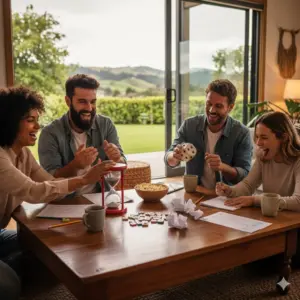


The golf card game is a popular choice for New Zealand social gatherings, offering a unique challenge where the objective is to earn the lowest score possible across several rounds. This comprehensive guide explores the essential rules, strategic nuances, and variations of the golf card game, providing Kiwi players with actionable insights to master their hand management and decision making. We examine the standard six card and nine card versions, detailing the setup, drawing mechanics, and the pivotal moment of the "turn over" that signals the end of a round. Readers will gain a professional understanding of card values, the tactical importance of pairs, and how to effectively manage their hidden grid to outmaneuver opponents. Whether you are a casual player or a seasoned enthusiast, these golf card game insights will ensure you approach the table with the authority and skill required to achieve a winning low score.
Understanding the core objective of the golf card game
In the golf card game, players aim to have the lowest total value of cards in their grid at the end of a set number of holes, typically nine or eighteen. Unlike most card games where high cards are coveted, here they represent a high score and are seen as a disadvantage. The game is played with a standard 52 card deck and can accommodate two to four players comfortably. Each player is dealt a grid of face down cards, and through a series of draws and discards, they attempt to replace high value cards with lower ones or form pairs that cancel each other out. This inversion of traditional card values makes the golf card game a refreshing tactical exercise that rewards memory and calculated risk.
- The winner is the player with the lowest cumulative score after all rounds.
- Players work to reveal their hidden cards while improving their hand.
- A standard 52 card deck is used, though multiple decks can be mixed for larger groups.
- The game perfectly mirrors the scoring philosophy of actual golf.
The winner is the player with the lowest cumulative score after all rounds.
Players work to reveal their hidden cards while improving their hand.
A standard 52 card deck is used, though multiple decks can be mixed for larger groups.
The game perfectly mirrors the scoring philosophy of actual golf.
| Game Element | Description |
|---|---|
| Goal | Achieve the lowest numerical score |
| Deck | Standard 52 cards (Jokers optional) |
| Setup | Face down grid for each player |
| Duration | Usually 9 or 18 “holes” (rounds) |
Initial setup and dealing the grid
At the start of the golf card game, the dealer provides each player with a specific number of cards, most commonly six, arranged in a two by three grid. These cards remain face down, and players are generally permitted to peek at only two of their cards before the round begins. The remaining deck is placed in the center as a draw pile, with the top card flipped to start the discard pile. Establishing a clean and organized grid is essential for maintaining focus as you swap cards throughout the game.
Navigating card values and scoring mechanics
Mastering the golf card game requires a firm grasp of the numerical values assigned to each card rank. Numbered cards from 3 to 10 carry their face value, while Aces are highly desirable as they only contribute 1 point. Twos are often considered "birdie" cards, worth minus 2 points in some variations or zero in others. Face cards present a mixed bag; Jacks and Queens are high penalty cards worth 10 points each, but Kings are usually worth zero or minus value, making them prime cards to keep in your grid. Understanding these values allows you to prioritize which cards to discard immediately.
- Aces are worth 1 point.
- Cards 2 through 10 are worth their face value.
- Jacks and Queens are worth 10 points each.
- Kings are special "zero" cards that help lower your score.
Aces are worth 1 point.
Cards 2 through 10 are worth their face value.
Jacks and Queens are worth 10 points each.
Kings are special "zero" cards that help lower your score.
| Card Rank | Point Value | Strategic Status |
|---|---|---|
| Ace | 1 | Excellent |
| 2 | -2 or 0 | Premium |
| 3 to 10 | Face Value | Neutral to Poor |
| Jack / Queen | 10 | High Risk |
| King | 0 | Excellent |
The tactical advantage of pairing cards
A significant rule in the golf card game is the "column" or "pair" bonus. If a player manages to have two cards of the same rank in a single vertical column of their grid, those cards cancel each other out and result in a score of zero for that column. For instance, two Tens in a column are worth 0 points instead of 20. This mechanic is a game changer, as it allows you to safely hold high value cards if you can find their matching pair, adding a layer of depth to your discard decisions.
Executing a standard turn in the golf card game
A turn in the golf card game consists of drawing a card from either the stock pile or the discard pile. If you draw a card that improves your grid, you replace one of your existing cards (face up or face down) and place the old card on the discard pile. If you draw from the stock and do not want the card, you can discard it directly, but you must then flip one of your face down cards face up. This progression continues clockwise until a player has all their cards face up, triggering the final turn for everyone else.
- Choose between the hidden stock or the visible discard.
- Replacing a card automatically reveals its position in your grid.
- Discarding a drawn stock card requires flipping a hidden card.
- Strategy involves deciding when to reveal cards versus when to keep them hidden.
Choose between the hidden stock or the visible discard.
Replacing a card automatically reveals its position in your grid.
Discarding a drawn stock card requires flipping a hidden card.
Strategy involves deciding when to reveal cards versus when to keep them hidden.
| Action | Result | Trade-off |
|---|---|---|
| Draw Discard | Take a known value | Opponents see what you are building |
| Draw Stock | Take an unknown value | High risk of a high value card |
| Replace Card | Update grid value | You must discard the replaced card |
| Flip Card | Reveal hidden info | No value change, just information gain |
Triggering the end of a hole
The round concludes when one player flips their final card face up. At this point, every other player at the table gets one final turn to improve their grid. Once these turns are complete, all remaining face down cards are revealed, and the scores are tallied for the hole. In the golf card game, the timing of when you choose to reveal your last card is crucial; doing it too early might leave you with a higher score than opponents who use their final turn effectively.
Mastering the six card golf variation
The six card version is perhaps the most widely played iteration of the golf card game in New Zealand. Arranged in two rows of three, this format emphasizes the vertical column pairing rule. Because you have more columns than the four card version, there are more opportunities to cancel out high scores. Players must be particularly careful with the middle column, as it often becomes the target for aggressive discards from opponents. Memory plays a massive role here, as you must remember the values of your face down cards to decide which ones to replace when a low card appears in the discard pile.
- Vertical columns are the primary scoring units.
- Two cards of the same rank in a column equal zero points.
- Memory of face down cards is essential for efficient swapping.
- The game moves quickly, often requiring fast decision making.
Vertical columns are the primary scoring units.
Two cards of the same rank in a column equal zero points.
Memory of face down cards is essential for efficient swapping.
The game moves quickly, often requiring fast decision making.
| Grid Position | Role | Importance |
|---|---|---|
| Column 1 | Early reveal | Sets the tone for the hand |
| Column 2 | The pivot | Often used for pairing high cards |
| Column 3 | The closer | Usually the last to be revealed |

Managing high value cards in six card golf
If you are stuck with a Queen (10 points) in the golf card game, your priority should be to either discard it for a lower card or find another Queen to place in the same column. Experienced players often watch their opponents' grids; if an opponent discards a card you need for a pair, you must weigh the benefit of taking it against the risk of revealing your grid's strategy to the table.
Advanced strategies for nine card golf
For those seeking a longer and more complex match, the nine card version of the golf card game offers a 3×3 grid. This format significantly increases the difficulty of memorizing card positions and expands the scoring potential. In nine card golf, some house rules allow for diagonal pairs or horizontal sets to also count as zero, though vertical columns remain the standard. The increased card count means the deck is depleted faster, making the choice of when to draw from the stock pile even more critical. Read more in Wikipedia.
- A larger 3×3 grid provides more scoring combinations.
- Deck management becomes vital as more cards are in play.
- Vertical sets of three of the same rank may result in a negative score.
- The game duration is longer, requiring sustained concentration.
A larger 3×3 grid provides more scoring combinations.
Deck management becomes vital as more cards are in play.
Vertical sets of three of the same rank may result in a negative score.
The game duration is longer, requiring sustained concentration.
| Grid Type | Difficulty | Complexity |
|---|---|---|
| 4 Card Grid | Low | Very fast paced |
| 6 Card Grid | Medium | Standard social play |
| 9 Card Grid | High | Strategically deep |
The power of the "Triple" in nine card golf
In many variations of nine card golf card game, getting three of a kind in a vertical column is even better than a pair. Some rules award a score of minus 10 or minus 20 for a full column of matching cards. This "holy grail" of golf card game strategy can completely erase a poor performance in previous holes, making the 9 card version highly volatile and exciting for competitive players.
The importance of card counting and observation
A professional approach to the golf card game involves more than just looking at your own grid. You must actively observe what your opponents are picking up and discarding. If you see an opponent picking up several 4s, you know that 4s are likely being removed from the deck and organized into their grid. This information tells you that attempting to pair your own 4 is statistically less likely to succeed. In New Zealand's competitive card circles, "reading the table" is what separates the winners from the losers.
- Track which low cards have already been discarded or picked up.
- Observe which columns opponents are focusing on to predict their end game.
- Use the discard pile as a map of what cards are still available in the deck.
- Avoid discarding low cards that your neighbor clearly needs for a pair.
Track which low cards have already been discarded or picked up.
Observe which columns opponents are focusing on to predict their end game.
Use the discard pile as a map of what cards are still available in the deck.
Avoid discarding low cards that your neighbor clearly needs for a pair.
| Observation Target | Information Gained | Strategic Action |
|---|---|---|
| Opponent’s Discards | Cards they don’t want | Safe ranks to discard yourself |
| Opponent’s Pickups | Cards they are pairing | Avoid trying to pair those same ranks |
| Remaining Deck | Probability of low cards | Decide between stock and discard |
Defensive play in the final turns
When you realize an opponent is about to flip their last card in the golf card game, you may need to shift to defensive play. This might mean discarding a high card you were hoping to pair, simply to ensure your score doesn't skyrocket if the round ends abruptly. Balancing the desire for a "perfect" zero-point column against the reality of an imminent round end is a key skill.
Cognitive benefits of playing the golf card game
The golf card game is not only a source of entertainment but also a fantastic mental workout. It requires the use of short term memory to track hidden cards, mathematical skills for constant score updates, and logical reasoning for probability assessment. In New Zealand, many community groups and retirement villages encourage the golf card game as a way to maintain cognitive health and social engagement. The tactile nature of the cards and the constant need to adapt to new information keeps the brain sharp and active.
- Enhances short term memory and recall capabilities.
- Improves mental arithmetic and basic probability processing.
- Fosters social interaction and healthy competition.
- Encourages focus and sustained attention over multiple rounds.
Enhances short term memory and recall capabilities.
Improves mental arithmetic and basic probability processing.
Fosters social interaction and healthy competition.
Encourages focus and sustained attention over multiple rounds.
| Cognitive Skill | Application in Golf |
|---|---|
| Memory | Recalling the value of face down cards |
| Probability | Estimating the chance of drawing an Ace |
| Logic | Deciding whether to break a pair for a lower card |
| Focus | Monitoring the table over 18 holes |

Social connection through card gaming
Beyond the mental benefits, the golf card game is a brilliant "social glue." Its slow to medium pace allows for conversation and "table talk," making it an ideal choice for a relaxed evening with friends or family. The shared experience of a "bad bounce" (drawing a King when you needed an Ace) or a spectacular comeback creates lasting memories and strengthens bonds.
Etiquette and sportsmanship at the table
Maintaining proper etiquette is essential for an enjoyable golf card game experience. This includes dealing cards fairly, not peeking at opponents' hidden cards, and announcing your score clearly at the end of each hole. In the New Zealand spirit of fair play, it is also customary to assist newer players with scoring until they become comfortable with the card values. Respecting the "final turn" rule and not rushing others ensures that the competitive nature of the game remains friendly and inclusive.
- Always wait for the player to your right to finish their turn.
- Do not touch the discard pile unless it is your turn to draw.
- Keep your grid organized so all players can see your face up cards.
- Be a gracious loser and a humble winner; the "luck of the draw" is always a factor.
Always wait for the player to your right to finish their turn.
Do not touch the discard pile unless it is your turn to draw.
Keep your grid organized so all players can see your face up cards.
Be a gracious loser and a humble winner; the "luck of the draw" is always a factor.
| Do | Don’t |
|---|---|
| Clear the table of distractions | Peek at the bottom of the deck |
| Record scores accurately | Hide your face up cards from others |
| Offer a rematch after 9 holes | Complain about a “bad hand” |
| Handle cards gently | Slow down the game unnecessarily |
Resolving scoring disputes
Occasionally, players may disagree on the total score of a hole in the golf card game. The best practice is to have a dedicated scorekeeper who tallies the points as each player reveals their grid. If a mistake is found, simply re-count the cards together. Transparency is the best way to avoid conflict and keep the game moving smoothly.
Adapting the golf card game for travel and outdoors
New Zealanders love the outdoors, and the golf card game is a perfect companion for camping trips or beach outings. To make the game more travel-friendly, consider using waterproof plastic cards that can withstand wind and sand. Since the game requires a bit of table space for the grids, a flat picnic blanket or a folding camping table works best. Its simplicity and lack of complex equipment make it one of the most portable forms of entertainment for any Kiwi road trip.
- Use 100% plastic cards for durability in nature.
- A weighted discard pile prevents cards from blowing away in the wind.
- Six card golf is more space-efficient for small camping tables.
- Keep a small notebook and pen for easy scorekeeping on the go.
Use 100% plastic cards for durability in nature.
A weighted discard pile prevents cards from blowing away in the wind.
Six card golf is more space-efficient for small camping tables.
Keep a small notebook and pen for easy scorekeeping on the go.
| Outdoor Setting | Recommended Adaptation |
|---|---|
| Beach | Use a heavy stone as a deck weight |
| Camping | Play inside the tent if it’s raining |
| Bach / Holiday Home | Use a large dining table for 9 card golf |
| Picnic | Choose the 4 card version for smaller blankets |
Creating a travel "Golf Kit"
Many families have a dedicated "card kit" for their summer holidays. Including a fresh deck of cards, a score pad, and a printed copy of the golf card game rules ensures that you are always ready for a match, whether you are at a DOC campsite in the South Island or a luxury lodge in the North.
Final thoughts on mastering the golf card game
The golf card game remains a beloved pastime in New Zealand because it successfully blends simple mechanics with deep tactical layers. By focusing on card values, column pairings, and careful observation of your opponents, you can consistently achieve the low scores needed for victory. Whether you prefer the classic six card format or the challenging nine card grid, the game offers endless replayability and mental stimulation. As you continue to play, you will develop your own "course management" style, learning when to take risks and when to play it safe. We hope this guide has provided you with the foundational knowledge and advanced insights to enjoy the golf card game at its highest level.
FAQ
How many people can play the golf card game?
The game is best played with 2 to 4 players using a single 52-card deck. If you have a larger group of 5 to 8 people, you can simply mix two decks together and adjust the starting hand size if necessary.
What is the most important card in the golf card game?
While Aces are great for a low score of 1, Kings are often considered the most important because they are worth 0 points (and in some rules, even negative points). They are the easiest way to significantly drop your total.
Can I look at my face down cards during the game?
In standard golf card game rules, you can only peek at two of your cards at the very beginning. After that, you must remember their values. You are not allowed to look at them again unless you replace them or the round ends.
What happens if the draw pile runs out?
If the stock pile is depleted before someone finishes their grid, the discard pile (excluding the top card) is shuffled and placed face down to form a new stock pile.
How long does a typical game last?
A single "hole" takes about 5 to 10 minutes. A full 9-hole match usually lasts around 45 minutes, while an 18-hole tournament can take up to 90 minutes.
Do Jokers have a place in the golf card game?
Jokers are optional. If included, they are typically worth minus 2 or minus 5 points, making them the most valuable cards for achieving a low score.
Is the golf card game purely luck-based?
While the draw is random, the game involves significant skill in memory, probability assessment, and tactical discarding. A skilled player will consistently beat a novice over multiple holes.
What is the "9-point" penalty rule?
In some advanced New Zealand variations, if you trigger the end of the round by flipping your last card but don't end up with the lowest score, you are penalized with an additional 10 or 20 points.
Can I pair cards horizontally?
In the standard six card version, only vertical columns count for the zero-point pair bonus. However, you should always check the "house rules" before starting, as some groups allow horizontal sets.
Where can I find more people to play with?
Many local community centers, libraries, and board game cafes in New Zealand have regular card game nights. It is also a very popular game among tramping and camping groups.