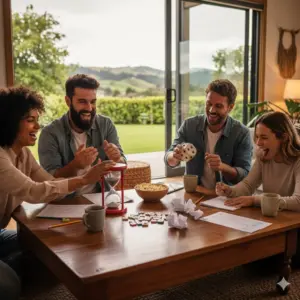

This comprehensive guide explores the thriving landscape of board games in New Zealand, covering everything from the rise of modern hobbyist titles and the social benefits of tabletop gaming to practical advice on building a collection and finding local clubs. We delve into the specific trends shaping the Kiwi gaming scene, provide detailed comparisons of popular genres, and offer actionable insights for both beginners and seasoned veterans looking to enhance their gaming experience. Through a deep dive into mechanics, community hubs, and the economic value of the hobby, this article serves as the definitive resource for navigating the world of board games in Aotearoa.

The Evolution of Tabletop Gaming in New Zealand
The landscape of board games in New Zealand has undergone a massive transformation over the last decade, shifting from a niche hobby played in dark basements to a mainstream social phenomenon that rivals traditional digital entertainment. Historically, Kiwi households were limited to classic titles like Monopoly or Scrabble, but the "Golden Age" of board gaming has introduced sophisticated mechanics, immersive narratives, and high-quality components to the local market. This evolution is fueled by a desire for tactile, face-to-face interaction in an increasingly digital world, making board games a cornerstone of modern New Zealand social life. Whether it is a competitive strategy session at a dedicated gaming cafe or a relaxed family night in the suburbs, the diversity of available titles ensures there is a game for every demographic and skill level.
- Tactile Engagement: Players value the physical presence of cards, wooden meeples, and high-quality boards that digital screens cannot replicate.
- Social Connection: Board games provide a structured environment for interaction, reducing the social anxiety often associated with unstructured gatherings.
- Cognitive Benefits: Many modern games challenge players' critical thinking, resource management, and long-term planning skills.
- Accessibility: With the rise of "gateway games," the barrier to entry has never been lower for those new to the hobby.
Tactile Engagement: Players value the physical presence of cards, wooden meeples, and high-quality boards that digital screens cannot replicate.
Social Connection: Board games provide a structured environment for interaction, reducing the social anxiety often associated with unstructured gatherings.
Cognitive Benefits: Many modern games challenge players' critical thinking, resource management, and long-term planning skills.
Accessibility: With the rise of "gateway games," the barrier to entry has never been lower for those new to the hobby.
Understanding the Modern Gaming Renaissance
The shift toward modern tabletop gaming is characterized by the move away from "roll-and-move" mechanics toward more player-driven agency. In New Zealand, this is particularly evident in the growing popularity of Eurogames, which emphasize strategy and resource optimization over direct conflict or luck. This section of the market has seen exponential growth, supported by local retailers and international shipping improvements that bring the latest Kickstarter hits directly to New Zealand shores.
Essential Categories of Board Games for Kiwi Players
When building a collection in New Zealand, it is crucial to understand the different genres that define the current market to ensure your investment matches your social group's preferences. Strategy games often dominate the conversation, but party games, cooperative titles, and deck-builders all hold significant weight in the local ecosystem. Understanding the nuances between a "Legacy" game, where the board permanently changes over time, and a "One-shot" experience is vital for planning long-term gaming sessions with friends.
| Game Category | Primary Mechanic | Typical Player Count | Best For |
| Eurogames | Resource Management | 2–5 Players | Strategic thinkers and low-conflict groups |
| Ameritrash | Dice Rolling / Combat | 2–6 Players | Narrative fans and those who enjoy high randomness |
| Party Games | Social Deduction / Speed | 4–12+ Players | Large gatherings and casual ice-breaking |
| Cooperative | Teamwork vs. Game | 1–4 Players | Players who prefer working together against a challenge |
Strategic thinkers and low-conflict groups
Narrative fans and those who enjoy high randomness
Large gatherings and casual ice-breaking
Players who prefer working together against a challenge
The Rise of Cooperative Gameplay
Cooperative games have seen a surge in New Zealand because they eliminate the "sore loser" dynamic often found in competitive titles. These games require players to communicate effectively and leverage unique character abilities to solve a common puzzle, making them excellent tools for team building and family bonding.
Selecting the Right Board Games for Your Household
Choosing the perfect game requires a careful balance between complexity, duration, and the interests of your core gaming group. In New Zealand, where "The Great Indoors" is a popular pastime during the winter months, selecting games that offer high replayability is essential for getting the best value for your money. You should consider the "weight" of a game—a term used by hobbyists to describe how difficult a game is to learn and master—before introducing it to a casual group. Starting with lighter titles like Catan or Ticket to Ride allows players to build confidence before moving on to heavy-weight simulations or complex 4X (e.g., Explore, Expand, Exploit, Exterminate) strategy games.

- Player Count: Always check the "sweet spot" for player counts, as many games labeled for 2–4 players actually play best at exactly 3.
- Time Commitment: Be realistic about how much time your group has; a 3-hour epic might not be suitable for a Tuesday night.
- Theme Appeal: Whether it’s sci-fi, historical, or whimsical fantasy, a compelling theme can help "sell" a complex game to skeptical players.
- Space Requirements: Some "table hogs" require a massive surface area that might not fit on a standard New Zealand dining table.
Player Count: Always check the "sweet spot" for player counts, as many games labeled for 2–4 players actually play best at exactly 3.
Time Commitment: Be realistic about how much time your group has; a 3-hour epic might not be suitable for a Tuesday night.
Theme Appeal: Whether it’s sci-fi, historical, or whimsical fantasy, a compelling theme can help "sell" a complex game to skeptical players.
Space Requirements: Some "table hogs" require a massive surface area that might not fit on a standard New Zealand dining table.
Managing Game Weight and Complexity
The Weight Rating is a metric often used by the community to gauge how much mental effort is required to play. A game with a weight of 1.0 is generally very simple (like Uno), while a game approaching 4.5 or 5.0 represents a significant investment in rules study and strategic depth.
Where to Buy Board Games in New Zealand
New Zealanders have several options for sourcing games, ranging from specialized local game stores (LGS) to large-scale online retailers. Supporting a local game store often provides benefits beyond the purchase, such as access to gaming tables, organized play events, and expert advice from staff who are passionate about the hobby. However, online shopping remains a powerful tool for finding niche expansions or international versions that might not be stocked on local shelves. For those looking to save money, the second-hand market in New Zealand is robust, with various community groups and auction sites offering "well-loved" titles at a fraction of their retail price.
| Retail Channel | Pros | Cons |
| Local Game Store | Expert advice, community events, immediate pickup | Slightly higher prices, limited shelf space |
| Online Specialty Stores | Massive selection, competitive pricing, pre-orders | Shipping costs, wait times, lack of physical inspection |
| Big Box Retailers | Very affordable, easy access in malls | Mostly “mass-market” titles, lack of hobbyist depth |
| Second-hand Markets | Lowest prices, find out-of-print gems | Quality varies, missing components potential |
Slightly higher prices, limited shelf space
Shipping costs, wait times, lack of physical inspection
Mostly "mass-market" titles, lack of hobbyist depth
Quality varies, missing components potential
Supporting the Local Gaming Infrastructure
By purchasing from local New Zealand businesses, gamers help sustain the infrastructure that allows for tournaments and community meetups. Many Auckland and Wellington-based stores also offer "rent-to-buy" schemes or library systems where you can test a game for a small fee before committing to a full purchase.
Building a Thriving Board Game Community
The true heart of the hobby in New Zealand lies in its community. From regional conventions like Wellycon to local library meetups, there are countless opportunities to connect with fellow enthusiasts. Joining a board game club is one of the fastest ways to improve your skills and gain exposure to a wider variety of games without having to buy them all yourself. These communities are generally very welcoming to newcomers, often hosting "newbie nights" designed specifically to teach the basics of popular titles. Modern board games encompass a wide range of tabletop activities, including traditional card games and complex strategy simulations. Lest meira á Wikipedia.
- Regional Conventions: Events like Wellycon (Wellington) and Board Games by the Bay (Auckland) are highlights of the Kiwi gaming calendar.
- Online Forums: Facebook groups and Discord servers allow NZ gamers to trade, discuss strategy, and organize private sessions.
- Library Programs: Many municipal libraries across Aotearoa now host free board game afternoons for teens and adults.
- Gaming Cafes: Hybrid venues that serve food and drinks while providing access to a massive wall of games for a small cover charge.
Regional Conventions: Events like Wellycon (Wellington) and Board Games by the Bay (Auckland) are highlights of the Kiwi gaming calendar.
Online Forums: Facebook groups and Discord servers allow NZ gamers to trade, discuss strategy, and organize private sessions.
Library Programs: Many municipal libraries across Aotearoa now host free board game afternoons for teens and adults.
Gaming Cafes: Hybrid venues that serve food and drinks while providing access to a massive wall of games for a small cover charge.
The Impact of Local Conventions
Conventions are more than just places to play; they are hubs for the "unpub" scene, where local New Zealand game designers showcase their prototypes for playtesting. This creates a unique feedback loop where the Kiwi gaming public directly influences the development of domestic titles.
Social and Mental Benefits of Regular Play
Engaging with board games offers significant psychological benefits, particularly in the realm of executive function and social emotional learning. For younger players, games teach the value of patience, following rules, and dealing with setbacks in a controlled environment. For adults, the hobby serves as a vital "third space" outside of work and home, offering a mental reset through focused, non-screen-based play. Research suggests that regular strategic gaming can help maintain cognitive flexibility and memory as we age, making it a productive hobby for all life stages.

| Benefit Area | Description | Impact on Players |
| Cognitive | Enhances logic and spatial reasoning | Improved problem-solving in daily life |
| Emotional | Builds resilience and sportsmanship | Better stress management and empathy |
| Social | Facilitates direct communication | Stronger community ties and reduced isolation |
| Educational | Teaches math, history, and literacy | Engagement with learning in a fun context |
Improved problem-solving in daily life
Better stress management and empathy
Stronger community ties and reduced isolation
Engagement with learning in a fun context
Board Games as a Tool for Education
Teachers across New Zealand are increasingly incorporating board games into the classroom to teach complex subjects. A game about the industrial revolution or ecosystem management can provide a much more visceral understanding of a topic than a textbook alone.
Strategies for Organizing Successful Game Nights
Hosting a game night requires more than just a stack of boxes; it requires careful curation of the guest list and the environment. One of the most common mistakes is trying to teach a complex game while players are still arriving or distracted by food. A successful host in New Zealand usually prepares by watching a rules video beforehand, ensuring they can explain the mechanics clearly and concisely. It is also important to provide snacks that aren't "messy"—avoiding greasy chips that could ruin expensive cardstock or game boards is a hallmark of a seasoned gamer.
- Pre-Selection: Decide on the games before guests arrive to avoid "choice paralysis" at the start of the night.
- Teaching Technique: Use the "How to Win" method—start with the goal, then explain the actions players take to get there.
- Atmosphere: Lighting and background music (ambient soundtracks) can greatly enhance the thematic experience.
- Snack Management: Use bowls and napkins; keep drinks on a separate side table to prevent spills on the board.
Pre-Selection: Decide on the games before guests arrive to avoid "choice paralysis" at the start of the night.
Teaching Technique: Use the "How to Win" method—start with the goal, then explain the actions players take to get there.
Atmosphere: Lighting and background music (ambient soundtracks) can greatly enhance the thematic experience.
Snack Management: Use bowls and napkins; keep drinks on a separate side table to prevent spills on the board.
Managing the "Quarterback" Problem
In cooperative games, "quarterbacking" occurs when one dominant player tells everyone else what to do. To keep game nights fun, it is important to encourage all players to make their own decisions, even if they aren't the most optimal moves strategically.
Digital Integration in the Tabletop World
While the appeal of board games is their physical nature, technology is playing an increasing role in the hobby. Many modern games feature companion apps that handle bookkeeping, provide atmospheric soundscapes, or act as an automated "AI" opponent for solo play. Additionally, platforms like Tabletop Simulator (TTS) allow New Zealanders to play with friends across the globe, providing a way to test expensive games before buying the physical copy. This hybrid approach has helped bridge the gap for players who live in more remote parts of the country where a local gaming group might be harder to find.
| Technology Type | Example/Use Case | Benefit for Kiwis |
| Companion Apps | Mansions of Madness / Gloomhaven Helper | Reduces setup time and complex math |
| Digital Platforms | Board Game Arena / Tabletop Simulator | Allows play during lockdowns or across distances |
| How-to-Play Videos | Watch It Played / Gaming Rules! | Makes learning new games much faster |
| Crowdfunding | Kickstarter / Gamefound | Direct access to innovative global designs |
Reduces setup time and complex math
Allows play during lockdowns or across distances
Makes learning new games much faster
Direct access to innovative global designs
The Rise of Solo Gaming
Solo gaming has become a major sub-genre in New Zealand, with many players enjoying the "Zen" experience of managing a complex system on their own. Most modern H3 strategy games now include a dedicated solo mode by default.
Investing in Game Preservation and Accessories
For many enthusiasts in New Zealand, board games are a significant financial investment, and protecting that investment is a top priority. Card sleeving is a common practice to prevent wear and tear, especially for games that require frequent shuffling. Furthermore, high-quality storage solutions, such as "Kallax" shelving units or custom box inserts, help keep components organized and speed up the setup and teardown process. In the New Zealand climate, it is also worth considering humidity control in storage areas to prevent "warping" of boards and cards over several years.
- Sleeving: Using plastic sleeves for cards to protect against spills and natural oils from hands.
- Inserts: Replacing standard cardboard "troughs" with foam core or 3D-printed organizers.
- Upgraded Components: Buying "deluxified" tokens, such as metal coins or resin resources, to replace standard cardboard.
- Board Game Tables: Dedicated furniture with recessed play areas and felt surfaces for the ultimate gaming experience.
Sleeving: Using plastic sleeves for cards to protect against spills and natural oils from hands.
Inserts: Replacing standard cardboard "troughs" with foam core or 3D-printed organizers.
Upgraded Components: Buying "deluxified" tokens, such as metal coins or resin resources, to replace standard cardboard.
Board Game Tables: Dedicated furniture with recessed play areas and felt surfaces for the ultimate gaming experience.
The Value of Organized Storage
A game that takes 30 minutes to set up is less likely to hit the table than one that is organized and ready to go in five. Investing time in organization directly leads to more frequent play and higher satisfaction with your collection.
The Future of the Kiwi Board Gaming Scene
As we look toward the future, the New Zealand board gaming scene shows no signs of slowing down. We are seeing a rise in domestically designed games that reflect Kiwi culture and landscapes, providing a unique local flavor to a global industry. Sustainability is also becoming a major focus, with manufacturers moving away from plastic components toward biodegradable materials. For the average Kiwi gamer, this means more choices, better quality, and a more inclusive community that continues to welcome anyone with a desire to sit down and play.
| Future Trend | Description | Expected Impact |
| Sustainable Materials | Removal of single-use plastics and shrink wrap | Environmentally friendly hobby growth |
| Local Design Growth | More NZ-based designers reaching global markets | Increased representation of NZ culture |
| Augmented Reality | AR overlays for rule explanations or visuals | Easier learning and more immersive themes |
| Mainstream Integration | Board games appearing in non-gaming venues | Wider social acceptance and accessibility |
Environmentally friendly hobby growth
Increased representation of NZ culture
Easier learning and more immersive themes
Wider social acceptance and accessibility
Encouraging New Designers
The New Zealand game design community is small but fierce, with several local titles gaining international acclaim. Supporting these designers at the "proto-spiel" stage is key to ensuring Aotearoa remains a contributor to the global tabletop stage.
Final Thoughts
The world of board games in New Zealand is more vibrant and accessible than ever before. Whether you are looking for a deep strategic challenge, a way to connect with your family, or a new social circle, the tabletop hobby offers endless possibilities. By understanding the different genres, supporting local retailers, and engaging with the community, you can turn a simple box of cardboard and plastic into a lifetime of memories. As the hobby continues to grow, the focus remains on the simple joy of gathering around a table and sharing an experience—a tradition that is as relevant today as it has ever been.
Algengar spurningar
Hvaða borðspil eru best fyrir byrjendur?
Byrjendur ættu að leita að spilum með einfaldar reglur en mikla skemmtun, svo sem Ticket to Ride eða Catan.
Hvar get ég fundið borðspilahópa á Nýja-Sjálandi?
Þú getur fundið hópa á samfélagsmiðlum eins og Facebook, eða með því að heimsækja staðbundna borðspilaklúbba og bókasöfn.
Eru borðspil dýr á Nýja-Sjálandi?
Verð getur verið hærra vegna flutningskostnaðar, en það er hægt að finna góð tilboð á netinu eða kaupa notuð spil.
Hversu langan tíma tekur að spila dæmigert nútíma borðspil?
Flest spil taka á milli þrjátíu og níutíu mínútur, en það fer algerlega eftir tegund spilsins.
Get ég spilað borðspil einn?
Já, mörg nútíma spil eru með sérstaka stillingu fyrir einn leikmann sem er mjög vinsæl.
Hvað eru Eurogames?
Eurogames eru spil sem leggja áherslu á stefnumótun og auðlindastjórnun frekar en beina baráttu eða heppni.
Hvernig geymi ég borðspilin mín best?
Best er að geyma þau á þurrum stað og nota jafnvel plastvasa utan um spilin til að verja þau.
Er hægt að búa til sín eigin borðspil?
Já, það er vaxandi hópur hönnuða á Nýja-Sjálandi sem býr til og prófar sín eigin spil.
Hvað er Kickstarter spil?
Það er spil sem hefur verið fjármagnað af fólki á netinu áður en það fer í almenna framleiðslu.
Eru borðspil góð fyrir börn?
Já, þau hjálpa börnum að læra samvinnu, stærðfræði og rökrétta hugsun á skemmtilegan hátt.