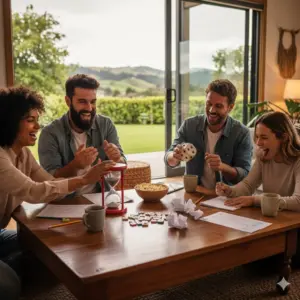


Boardgames NZ has evolved into a powerhouse of domestic entertainment and social infrastructure, reflecting a global tabletop market projected to reach USD 32.81 billion by 2033. In New Zealand, the resurgence of face-to-face play is driven by a collective desire for "digital detox" and authentic social connection. Modern gaming in Aotearoa is no longer limited to classic Monopoly; it encompasses complex "Eurogames," cooperative trick-taking adventures like The Crew, and massive 3D immersive experiences like Labyrinth: Chronicles. From the vibrant board game cafes in Auckland and Wellington to the specialized hobby shops in Christchurch, the local scene caters to everyone from casual families to hardcore strategists. This guide provides a professional deep dive into the 2026 landscape, offering actionable insights on the most anticipated releases, local community hubs, and the educational benefits of the "stealth learning" found in every hand. Whether you are a parent seeking a screen-free tool for child development or a veteran gamer hunting for the next "grail" title like Container, this comprehensive analysis serves as your tactical roadmap to the best of New Zealand’s tabletop culture.
- Market Trajectory: The tabletop games sector is expanding at a CAGR of 6.5% to 12.3%, fuelled by millennium interest and family-oriented play.
- Anticipated Hits: Major 2026 titles include RoboMon, All In: Predictions, and Azure.
- Local Hubs: Key venues include Cakes n Ladders (Auckland) and Counter Culture (Wellington), offering library access for small cover charges.
- Sustainable Shifts: Manufacturers are moving toward FSC-certified wood and biodegradable plastics to meet eco-conscious consumer demand.
- Educational ROI: Games like Wingspan and Catan are increasingly used in classrooms to teach numeracy, resource management, and strategic logic.
Market Trajectory: The tabletop games sector is expanding at a CAGR of 6.5% to 12.3%, fuelled by millennium interest and family-oriented play.
Anticipated Hits: Major 2026 titles include RoboMon, All In: Predictions, and Azure.
Local Hubs: Key venues include Cakes n Ladders (Auckland) and Counter Culture (Wellington), offering library access for small cover charges.
Sustainable Shifts: Manufacturers are moving toward FSC-certified wood and biodegradable plastics to meet eco-conscious consumer demand.
Educational ROI: Games like Wingspan and Catan are increasingly used in classrooms to teach numeracy, resource management, and strategic logic.
The Landscape of Boardgames NZ in 2026
The current state of boardgames NZ is defined by a sophisticated blend of traditional mechanical depth and modern digital integration. As screen fatigue becomes a prevalent societal concern, Kiwi households are turning to tabletop alternatives to break solitary technology cycles. The market is now diversified into specialized segments: high-energy party games like Taco Cat Goat Cheese Pizza, beautiful abstract titles such as Azul, and "legacy" games where decisions permanently alter the game state. Retailers like Mighty Ape and The Warehouse have expanded their inventories to include both mass-market classics and indie gems like Dune: Imperium – Uprising, ensuring that regional New Zealanders have immediate access to global gaming trends.
Top Player Demographics and Trends
| Demographic Segment | Preferred Game Genres | Market Driver |
| Families with Kids | Cooperative, Educational, Dexterity | Social bonding & development |
| Hardcore Strategists | Eurogames, War Games, Area Control | Intellectual stimulation & competition |
| Casual Adults | Party Games, Word Games, Quick Socials | “Digital detox” & ice-breaking |
| Niche Collectors | Legacy Games, Miniature Games, Kickstarters | Exclusivity & immersive hobbying |
- Offline Dominance: Despite digital growth, 72.8% of the market share remains firmly with physical board games due to their tactile appeal.
- Community Growth: Sanctioned events and tournaments in Auckland and Christchurch are driving "geek culture" into the mainstream.
- Price Point Flexibility: Options range from $10 travel games to $300+ expert miniature sets.
Offline Dominance: Despite digital growth, 72.8% of the market share remains firmly with physical board games due to their tactile appeal.
Community Growth: Sanctioned events and tournaments in Auckland and Christchurch are driving "geek culture" into the mainstream.
Price Point Flexibility: Options range from $10 travel games to $300+ expert miniature sets.
Mastering Strategy and the Learning Curve
Success in modern boardgames NZ requires a shift from simple luck to disciplined strategic analysis. Contemporary game design focuses on "streamlined rules" and accelerated gameplay to make complex concepts like resource management accessible to a wider age range. For example, the "gateway" classic Catan (now in its 6th Edition) teaches the fundamentals of trading and territorial expansion in under 60 minutes. Advanced players often utilize "Game Theory" to predict opponent moves in high-stakes titles like Root, where asymmetric roles mean every player is playing a different game within the same space. For those new to the hobby, professionals recommend starting with games that can be explained in under five minutes to avoid cognitive overload.

Recommended "Gateway" Strategy Titles
| Game Title | Mechanics | Strategic Skill |
| Ticket to Ride | Card drafting, Route building | Planning & Resource Allocation |
| Carcassonne | Tile placement, Area control | Spatial Reasoning |
| Splendor | Engine building, Set collection | Tactical Efficiency |
| The Mind | Cooperative, Non-verbal play | Intuition & Synchronicity |
- Cooperative Evolution: Games like The Crew: Mission Deep Sea teach teamwork by requiring players to win together or lose together.
- Deductive Reasoning: One Night Ultimate Werewolf and Chronicles of Crime sharpen the ability to solve mysteries through logic.
- Risk Management: Push-your-luck games like Purrramid (Q2 2026) challenge players to balance safety against high rewards.
Cooperative Evolution: Games like The Crew: Mission Deep Sea teach teamwork by requiring players to win together or lose together.
Deductive Reasoning: One Night Ultimate Werewolf and Chronicles of Crime sharpen the ability to solve mysteries through logic.
Risk Management: Push-your-luck games like Purrramid (Q2 2026) challenge players to balance safety against high rewards.
The Social Hub: Board Game Cafes in New Zealand
One of the primary catalysts for the growth of boardgames NZ is the proliferation of specialized board game cafes. These venues, such as Cakes n Ladders in Auckland, provide an inclusive space where for a small fee (typically $4.00–$10.00 per hour), guests gain access to libraries of over 850 titles. This "try-before-you-buy" model lowers the barrier to entry for expensive strategy games and fosters a thriving hobbyist community through organized events like "Dungeon Crawls" and quiz nights. In Wellington, Counter Culture serves as a premier social anchor, combining a vast game library with craft beer and fine wine, proving that modern gaming is as much an adult social experience as it is a family pastime.
Top Regional Gaming Venues
| Venue Name | Location | Specialty Feature |
| Cakes n Ladders | Auckland (Epsom) | Massive Eurogame library & TableTop series focus |
| Counter Culture | Wellington (Te Aro) | Over 900 games & inclusive LGBTQ+ friendly bar |
| Epsom Library | Auckland | Free community “Sunday Board Game” sessions |
| Scorpio Books | Christchurch | Large retail selection & local hobbyist support |
- Accessibility: Many venues now join schemes like the Hāpai Access Card to ensure inclusivity for guests with mobility needs.
- Events: Fortnightly D&D sessions and monthly teaching nights help novices enter complex hobbies.
- Ambiance: High-quality cafes prioritize task lighting and ergonomic seating to support marathon sessions.
Accessibility: Many venues now join schemes like the Hāpai Access Card to ensure inclusivity for guests with mobility needs.
Events: Fortnightly D&D sessions and monthly teaching nights help novices enter complex hobbies.
Ambiance: High-quality cafes prioritize task lighting and ergonomic seating to support marathon sessions.
Educational ROI: Tabletop Games in the Classroom
New Zealand educators are increasingly integrating board games into the national curriculum as part of "STEM education" initiatives. By simulating complex systems, games like Wingspan (which teaches bird ecology) or Catan Junior (which introduces economics) provide hands-on learning that standard textbooks cannot replicate. These tools foster critical thinking, numerical fluency, and social-emotional intelligence by requiring students to navigate structured conflict and cooperative goals. The "stealth learning" inherent in board games helps students develop spatial awareness and long-term planning without the academic pressure of formal testing.

Key Developmental Skills Taught by Gaming
- Numeracy: Card values and resource counting in Splendor or Rummikub.
- Literacy: Reading and interpreting complex action cards in Disney Lorcana or Magic: The Gathering.
- Conflict Management: Negotiating trades in Bohnanza or Catan.
- Spatial Reasoning: Constructing maps in Carcassonne or Kingdomino.
Numeracy: Card values and resource counting in Splendor or Rummikub.
Literacy: Reading and interpreting complex action cards in Disney Lorcana or Magic: The Gathering.
Conflict Management: Negotiating trades in Bohnanza or Catan.
Spatial Reasoning: Constructing maps in Carcassonne or Kingdomino.
Sustainable and Eco-Friendly Gaming Practices
A significant shift in the 2026 boardgames NZ market is the demand for sustainable manufacturing. Modern Kiwi consumers are increasingly eco-conscious, favouring publishers like HABA and Stonemaier Games who utilize certified sustainable wood, non-toxic paints, and recycled cardboard. Even mass-market editions, such as the Love Letter Classic Eco Box, are moving away from plastic inserts in favour of compostable alternatives. This trend is reshaping the "World of Cards" in NZ, with many retailers highlighting "FSC-certified" or "Plastic-Free" products to appeal to values-driven families.
| Brand / Publisher | Eco-Initiative | Impact |
| HABA Familygroup | Certified sustainable wood & non-toxic paints | Safe, durable play for younger ages |
| Stonemaier Games | Recycled paper for boards & packaging | Reduced deforestation & waste |
| Blue Orange Games | Replaced plastic packaging with cardboard | Reduced ocean plastic pollution |
| Days of Wonder | FSC-certified paper in major titles | Responsible forest sourcing |
2026 Product Spotlight: Most Anticipated Releases
The 2026 calendar for boardgames NZ is marked by high-profile sequels and innovative new systems. Designer Phil Walker-Harding (creator of Sushi Go) is launching All In: Predictions in March 2026, which introduces poker-hand manipulation to a gamified prediction system. For fans of grand adventures, RoboMon offers a board game translation of Pokémon-style creature taming, while Witchbound provides a "cosy" narrative journey through a magic-scarce world. These releases represent the pinnacle of 2026 game design: immersive themes, high production values, and mechanics that encourage multiple playthroughs.

2026 Launch Calendar
| Expected Release | Title | Genre / Type |
| March 2026 | All In: Predictions | Card / Hand Management |
| Q2 2026 | Purrramid | Push-your-luck Dice |
| Q2 2026 | RoboMon | Adventure / Tactical |
| Q3 2026 | Triangulation | Party / Word Deduction |
| Q4 2026 | Sail Legacy | Cooperative / Narrative Pirate |
- Legacy Innovation: Sail Legacy aims to be one of the most ambitious cooperative pirate experiences ever crafted, featuring branching storylines.
- 3D Integration: Labyrinth: Chronicles refreshes the 1980s classic with an entirely 3D maze and a new co-op campaign.
- Solo Focus: Many 2026 titles are including dedicated solo modes to cater to the rising demand for independent play.
Legacy Innovation: Sail Legacy aims to be one of the most ambitious cooperative pirate experiences ever crafted, featuring branching storylines.
3D Integration: Labyrinth: Chronicles refreshes the 1980s classic with an entirely 3D maze and a new co-op campaign.
Solo Focus: Many 2026 titles are including dedicated solo modes to cater to the rising demand for independent play.
Digital Hybridization: The App-Assisted Future
While the core of boardgames NZ remains physical, the integration of digital technology is creating "multisensory" experiences that traditional boards alone cannot provide. Titles like the Chronicles of Crime series utilize companion apps to bring crime scenes to life with music, interactive characters, and 360-degree virtual investigations. Augmented Reality (AR) and Virtual Reality (VR) are also making inroads, allowing players to overlay digital animations on physical pieces. This hybrid model reduces the "barrier to entry" by allowing apps to handle complex math and rule-tracking, letting players focus on the social and narrative elements of the game.
- Enhanced Immersion: Sound design and music composition delivered via app add cinematic depth to horror and mystery games.
- Streamlined Setup: Digital integration often eliminates the need for massive rulebooks, with interactive tutorials teaching the game as you play.
- Online Connectivity: Virtual tabletop platforms now allow Kiwi players to engage with international competitors in real-time.
Enhanced Immersion: Sound design and music composition delivered via app add cinematic depth to horror and mystery games.
Streamlined Setup: Digital integration often eliminates the need for massive rulebooks, with interactive tutorials teaching the game as you play.
Online Connectivity: Virtual tabletop platforms now allow Kiwi players to engage with international competitors in real-time.
Hosting the Ultimate NZ Game Night
To maximize the success of a home gaming session, professional setup is essential. Kiwi hosts are advised to use "layered lighting"—a dimmable overhead light combined with task lighting (like floor lamps)—to ensure the board is visible without creating a harsh environment. Comfort is equally critical; standard dining chairs can be upgraded with cushions to support "marathon" sessions of heavy strategy games. Furthermore, curating a thematic playlist (e.g., synthwave for a sci-fi adventure or classical for fantasy) can significantly elevate the immersion for your guests.

Game Night Checklist
- Lighting: Dimmable main light + task lighting for card text visibility.
- Seating: Circular or square layout to encourage social banter and interaction.
- Audio: Low-volume background music curated to match the game's theme.
- Refreshments: Easy-to-handle snacks that won't damage game components.
- Teaching: The host should know the rules beforehand to avoid "reading the manual" downtime.
Lighting: Dimmable main light + task lighting for card text visibility.
Seating: Circular or square layout to encourage social banter and interaction.
Audio: Low-volume background music curated to match the game's theme.
Refreshments: Easy-to-handle snacks that won't damage game components.
Teaching: The host should know the rules beforehand to avoid "reading the manual" downtime.
Competitive Play and Tournament Culture
The competitive side of boardgames NZ has seen a surge in "hardcore gamers" frequenting lounges for organized tournaments. Sanctioned events for games like Catan (Settlers of Catan 6th Edition) and Magic: The Gathering provide a platform for professional competition standards to gain acceptance. These tournaments often foster tight-knit fan communities that thrive on feedback loops and game analysis. For many, the goal is reaching international championships, proving that what starts as a kitchen-table hobby can evolve into a global competitive pursuit.
| Event Type | Focus Game | Community Hub |
| Sanctioned Qualifiers | Catan, Carcassonne | Specialty Hobby Shops |
| Dungeon Crawls | Dungeons & Dragons | Cakes n Ladders / Counter Culture |
| Party Tournaments | Decrypto, Triangulation | Board Game Cafes |
| Competitive CCG | Pokémon, Magic: The Gathering | Dedicated TCG Lounges |
The Economics of Gaming: Value vs. Investment
While some niche strategy games require high initial investments ($150+ for miniature games), the boardgames NZ market offers exceptional value through replayability. A "Gateway Game" costing $60.00 can provide hundreds of hours of family entertainment, often outperforming digital subscriptions in "cost-per-play". Furthermore, the rise of "Subscription-Model Expansion" allows players to receive curated game boxes monthly, reducing the risk of "choice overload" while providing exclusive content. For many Kiwis, building a board game library is an investment in long-term social wellness and family traditions.
- Replayability: Strategy games with high variety, like Wingspan or Terraforming Mars, offer new experiences every session.
- Resale Value: High-quality games often retain significant value on the secondary market in NZ.
- Subscription Boxes: New entrants like Build Game Box offer monthly kits for game design and play.
Replayability: Strategy games with high variety, like Wingspan or Terraforming Mars, offer new experiences every session.
Resale Value: High-quality games often retain significant value on the secondary market in NZ.
Subscription Boxes: New entrants like Build Game Box offer monthly kits for game design and play.
Final Thoughts
Boardgames NZ in 2026 stands as a testament to the enduring power of physical play in a digital age. By blending deep strategy, social connection, and educational value, the tabletop hobby has become a cornerstone of New Zealand’s modern cultural landscape. Whether you are visiting a premier cafe in Wellington, teaching a classroom of students through "stealth learning," or hosting an atmospheric game night in your own home, the "World of Cards" and boards offers a limitless horizon of discovery. As the market moves toward sustainable materials and innovative digital hybrids, the simple joy of rolling a die or placing a perfect tile remains a universal language of fun and connection for all Kiwis. To delve deeper into the global mechanics and history of the hobby, read more in the Wikipedia entry for board games.
FAQ
What are the best board games for beginners in NZ?
Ticket to Ride, Carcassonne, and Azul are top-rated for beginners because they can be explained in under five minutes.
Where can I find a board game cafe in Auckland?
Cakes n Ladders in Epsom is Auckland's premier cafe, featuring a massive library for a small hourly fee.
Are board games good for child development?
Yes, they promote "stealth learning" in numeracy, literacy, and social skills like turn-taking and resilience.
What are "legacy" board games?
Legacy games are those where your decisions, such as placing stickers or destroying cards, permanently change the game for future plays.
How much does it cost to use a board game cafe library?
Typical cover charges in NZ range from $4.00 to $10.00 per person for several hours of play.
What is the most popular modern board game in 2026?
Catan (Settlers of Catan) remains a global leader, with its 6th Edition being a top seller in NZ.
Do I need an app to play modern board games?
While many games are purely physical, "hybrid" titles like Chronicles of Crime or Labyrinth 3D utilize apps to enhance immersion and automate rules.
Are there board games specifically for two players?
Yes, titles like 7 Wonders Duel, Jaipur, and Patchwork are designed from the ground up specifically for two players.
Where can I buy indie board games in NZ?
Online retailers like Mighty Ape and specialized stores like Scorpio Books or Hobby Lords offer wide INDIE selections.
What is "International TableTop Day"?
It is a global celebration of board games, with NZ events typically held in April (April 18–20 in 2025/2026).