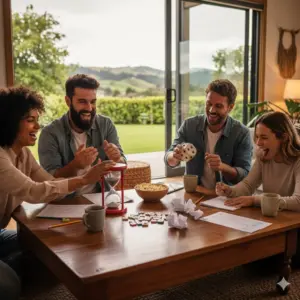
Scattergories remains one of the most beloved party games in New Zealand, offering a unique blend of creative thinking, vocabulary skills, and high-pressure decision-making. Since its original publication by Milton Bradley in 1988, the game has evolved from a simple parlor diversion into a competitive staple of Kiwi social gatherings and family game nights. This comprehensive guide explores the core mechanics of the game, including how to handle the 20-sided die and the nuances of the three-minute timer, while providing actionable strategies for maximizing points through alliteration and creative interpretation. We also delve into the local NZ market, identifying the best retailers to source the game—from specialty hobby shops to big-box stores like The Warehouse—and discussing how the game’s "market price" in New Zealand is influenced by global trends and local demand. Whether you are a beginner looking to understand the basic rules or a veteran seeker of obscure "Special Illustration" style answers, this article provides the localized insights necessary to dominate your next round of Scattergories in Aotearoa.

The Mechanics of Scattergories: How to Play and Win
The fundamental appeal of Scattergories lies in its simplicity: players race against a mechanical or digital timer to list unique words that fit specific categories and begin with a predetermined letter. In the standard New Zealand edition, a 20-sided die (excluding difficult letters like Q, X, and Z) is rolled to select the letter for the round. Players then have three minutes to fill out a list of 12 categories, such as "Boys Names," "Things That Are Cold," or "TV Shows". The pressure to be quick is balanced by the need to be unique; if another player provides the same answer, both players score zero for that category, making obscure and creative thinking the key to victory.
- The Roll: A 20-sided letter die is rolled to determine the starting letter for all 12 categories in the round.
- The Timer: A standard round lasts exactly three minutes, though variations like "Scattergories Junior" may offer more time.
- Uniqueness is Key: Points are only awarded if your answer is not duplicated by any other player at the table.
- The "Article" Rule: When using titles (like books or movies), initial articles such as "A," "An," or "The" are ignored for the letter requirement.
The Roll: A 20-sided letter die is rolled to determine the starting letter for all 12 categories in the round.
The Timer: A standard round lasts exactly three minutes, though variations like "Scattergories Junior" may offer more time.
Uniqueness is Key: Points are only awarded if your answer is not duplicated by any other player at the table.
The "Article" Rule: When using titles (like books or movies), initial articles such as "A," "An," or "The" are ignored for the letter requirement.
Master the Alliteration Bonus
One of the most effective ways to boost your score in Scattergories is through alliteration. Many house rules, and even some official versions, award double points if your answer consists of two words that both start with the target letter (e.g., "Peter Pan" for the letter P).
Strategic Vocabulary: Maximizing Your Score in Every Round
Winning consistently at Scattergories requires more than just a large vocabulary; it requires "strategic naming" to avoid common pitfalls. For example, if the letter is "A" and the category is "Fruit," most players will immediately think of "Apple." To ensure a point, a seasoned Kiwi player might instead opt for "Apricot" or even "Ackee" if the group allows for more obscure entries. Another advanced strategy is to use the "Last Name First" approach for famous people; for the category "US Presidents" and the letter "B," you could write "Bush, George" to fulfill the requirement.
| Strategy Type | Explanation | NZ Example |
| Alliteration | Use two words starting with the target letter. | Sea Salt (Things in a Kitchen) |
| Obscurity | Avoid the first word that comes to mind. | Echidna instead of Elephant (Animals) |
| Proper Nouns | Use specific names for broader categories. | Wellington instead of Walkway (Places) |
| Creative Gating | Defend borderline answers with logic. | Carpet (Things that are soft) |
The Art of the Challenge
Scattergories includes a "Challenge" mechanism where players can vote on whether an answer truly fits a category. In New Zealand gaming circles, this often leads to humorous debates about whether "Carpet" counts as a "Thing that is cold" (if it’s in a freezer) or if a "Knuckle" is a "Type of sandwich".
Where to Buy Scattergories in New Zealand
For Kiwis looking to add this classic to their collection, there are several reliable options across the country. Large retailers like Mighty Ape and The Warehouse Stationery typically stock the latest Hasbro Gaming editions, often priced between $28 and $35 NZD. If you are looking for vintage editions or the 30th Anniversary reproduction, checking Trade Me is often the best route, as many "factory sealed" older versions appear for collectors. Scattergories is a creative-thinking category-based party game originally published by Milton Bradley in 1988. Read more in Wikipedia.

- Mighty Ape NZ: Offers fast shipping and often has "Staff Picks" for board games including Scattergories.
- Warehouse Stationery: A great option for click-and-collect across many NZ cities like Auckland and Christchurch.
- Trade Me Marketplace: The primary source for second-hand games, replacement dice, or extra score pads.
- Specialty Hobby Shops: Stores like Spellbound Games often stock variations like "Scattergories Categories" or card game versions.
Mighty Ape NZ: Offers fast shipping and often has "Staff Picks" for board games including Scattergories.
Warehouse Stationery: A great option for click-and-collect across many NZ cities like Auckland and Christchurch.
Trade Me Marketplace: The primary source for second-hand games, replacement dice, or extra score pads.
Specialty Hobby Shops: Stores like Spellbound Games often stock variations like "Scattergories Categories" or card game versions.
Choosing Between Editions
While the classic board game is the most popular, New Zealanders can also find "Scattergories Categories," which focuses on finding multiple words for a single category using a "keyword" instead of a single letter.
Essential Category Lists for Kiwi Game Nights
The variety of categories is what keeps Scattergories fresh after dozens of play sessions. Standard lists provided in the box cover general topics, but many NZ groups enjoy creating "house lists" that include local references. For instance, adding categories like "NZ Towns," "All Blacks Players," or "Kiwi Snack Foods" can make the game feel more personal and engaging for a local audience.
| List Type | Common Categories | Kiwi Twist Ideas |
| Nature | Animals, Trees, Flowers | Native Birds, NZ Beaches |
| Pop Culture | TV Shows, Movie Titles, Bands | NZ Musicians, Local News Personalities |
| Daily Life | Things in a Kitchen, Clothing | Items in a Bach, Dairy Snacks |
| Abstract | Things that are sticky, Fears | Excuses for being late to work |
Creating Custom Lists
To breathe new life into an old set, try limiting categories further. Instead of "Animals," try "Animals found in the South Island" or "Birds that cannot fly". This increases the difficulty and ensures that even veteran players have to think hard.
Scoring Variations and House Rules in Aotearoa
While the official rules are straightforward, many New Zealand families have developed "House Rules" to adjust the game's difficulty or pace. One popular variation is "Strict vs. Lazy Gating," where the group decides beforehand if an answer like "Shoe" for "Things that are cold" is acceptable because shoes can be cold, or if the item must be inherently cold (like "Snow") to count.
- Double Points: Awarded for alliteration (e.g., "Big Bird" for B).
- The "Junior" Rule: Younger players can score 2 points for a correct letter and 1 point for a correct category even if the letter is wrong.
- Maxing Bonuses: Some groups limit the alliteration bonus to 2 points to prevent "run-on" sentences from dominating the score.
- Tie-Breakers: If scores are even after three rounds, a "sudden death" round with a single category is played.
Double Points: Awarded for alliteration (e.g., "Big Bird" for B).
The "Junior" Rule: Younger players can score 2 points for a correct letter and 1 point for a correct category even if the letter is wrong.
Maxing Bonuses: Some groups limit the alliteration bonus to 2 points to prevent "run-on" sentences from dominating the score.
Tie-Breakers: If scores are even after three rounds, a "sudden death" round with a single category is played.

Managing Group Conflicts
Because the game relies on group voting for challenges, it is helpful to establish a "Moderator" or use a coin flip (Heads for strict rules, Tails for lazy) at the start of each round to avoid arguments over subjective answers.
Digital and Solo Play Options for Scattergories
If you don't have a physical copy, there are several ways to enjoy Scattergories in New Zealand through digital means. Online "Scattergories List Generators" can provide endless new categories, while mobile apps allow you to play with friends remotely. For those who prefer a solo challenge, Hasbro has sanctioned "Scattergories Word Search Puzzles" which combine the category-matching mechanics with traditional word search gameplay.
| Platform | Best For | Features |
| Physical Board Game | Social gatherings (2-6 players) | Tactile feel, 20-sided die, classic timer |
| List Generator Web | Customizing game nights | Infinite lists, adjustable timers |
| Mobile Apps | Travel and quick games | Automated scoring, global leaderboards |
| Word Search Books | Solo play and brain training | Pre-set categories, matching hidden words |
The "Scattergories Method" for Conversation
Beyond gaming, some psychologists suggest using the "Scattergories Method" as an icebreaker for social interactions. Asking someone to "tell me three things you like starting with the letter C" can lead to much more interesting conversations than standard small talk.
Competitive Scattergories: Tips for the Advanced Player
For those who take their game nights seriously, advanced techniques involve "mental priming." Before the round starts, scan the room for items that start with common letters—often, the answer to a category like "Items in this room" is staring you right in the face. Additionally, practicing with common "filler" words can help you fill out a list when your brain goes blank; for the letter "S," keep words like "Shout," "Small," and "Striped" ready to attach to various categories.
- Visualizing the Category: For "Things in a junk drawer," visualize your own drawer at home to spark memory.
- Muscle Memory: Some players find that scribbling the first letter repeatedly helps their brain auto-complete a word.
- Adjective Abuse: Use adjectives to force a word into a letter requirement (e.g., "Old Junk" for O), but be prepared for a challenge from other players.
- Obscure Synonyms: If you can't think of a "Bird" starting with F, think of "Fowl".
Visualizing the Category: For "Things in a junk drawer," visualize your own drawer at home to spark memory.
Muscle Memory: Some players find that scribbling the first letter repeatedly helps their brain auto-complete a word.
Adjective Abuse: Use adjectives to force a word into a letter requirement (e.g., "Old Junk" for O), but be prepared for a challenge from other players.
Obscure Synonyms: If you can't think of a "Bird" starting with F, think of "Fowl".
The Importance of Speed
In Scattergories, a "bad" answer is almost always better than no answer. Even if you think your answer might be challenged, putting it down gives you a chance to score, whereas a blank line is a guaranteed zero.
Scattergories Variations: Categories and Card Games
Over the years, several spin-offs have hit the New Zealand market. "Scattergories The Card Game" is a faster, more portable version where players slap an "I Know" card to shout out answers based on a letter and category card deck. Another popular twist is "Scattergories Categories," which focuses on a single "keyword" per round, such as "CAMPING TRIP," where players must find a related word for every letter in the keyword (C, A, M, P, etc.).
| Game Variation | Core Difference | Best Audience |
| Classic Edition | 12 categories, 1 letter | Traditionalists and large groups |
| The Card Game | Slap-mechanic, no writing | Fast-paced play, travel |
| Categories (Twist) | 1 category, many letters | Logic lovers, 1-on-1 play |
| 30th Anniversary | Original 1989 components | Collectors and nostalgia fans |
The "Auteur" Side Events
Interestingly, the game has inspired "vanity" versions in the quiz community, known as "Scattergories side events". These often feature highly specific categories based on a single author's interests, such as "Literature Will Likes," showcasing the game's flexibility as a format for niche knowledge.
Maintaining Your Scattergories Set
To ensure your game lasts for years of Kiwi summers, proper maintenance of the components is essential. Replacement "Answer Pads" are often the first thing to run out, but these can be easily found at stores like Mighty Ape or even printed at home from online templates. Protecting the oversized 20-sided die is also crucial; it is heavy and can damage glass tables if rolled too forcefully—many veteran players recommend using a "Die-Rolling Board" or a soft mat.
- Laminating Lists: Some players laminate the category cards to prevent them from becoming dog-eared or stained.
- Timer Care: Mechanical timers can sometimes stick; a digital phone timer is a reliable backup.
- Replacement Pads: Always keep a spare pad or use a reusable "whiteboard" sheet for eco-friendly play.
- Safe Storage: Keep the folders organized to ensure all players always have the same lists in the same order.
Laminating Lists: Some players laminate the category cards to prevent them from becoming dog-eared or stained.
Timer Care: Mechanical timers can sometimes stick; a digital phone timer is a reliable backup.
Replacement Pads: Always keep a spare pad or use a reusable "whiteboard" sheet for eco-friendly play.
Safe Storage: Keep the folders organized to ensure all players always have the same lists in the same order.

Standardizing the Lists
When playing, ensure every player is looking at the exact same list (e.g., List 1, List 2). If the folders become disorganized, it can lead to unfair advantages and scoring errors.
The Cultural Impact of Scattergories in New Zealand
Scattergories occupies a unique place in the NZ cultural landscape, often appearing at holiday gatherings, work team-building events, and even school classrooms as a tool for literacy. Its ability to bridge generations—where a grandparent and a teenager can compete on equal footing—makes it a staple of the "Kiwi Family Christmas." The game even had a brief stint as a television game show in the early 90s, hosted by Dick Clark, which helped cement its place in the public consciousness as the definitive "category game".
| Context | Role of Scattergories | Benefit |
| Family Reunion | Multi-generational icebreaker | Engages everyone from kids to seniors |
| Office Team Building | Low-stakes competition | Encourages creative collaboration |
| Education | Vocabulary building | Fun way to practice spelling and categories |
| Social Clubs | Competitive tournament play | Tests depth of niche knowledge |
A Tool for Social Interaction
For those who find social gatherings difficult, the "Scattergories Method" of asking letter-based questions remains a powerful tool for steering conversations into interesting, non-standard directions.
Final Thoughts
Scattergories remains a quintessential part of the New Zealand tabletop experience because it rewards both the quick-witted and the creatively obscure. By understanding the core mechanics—from the 20-sided die to the strictness of the challenge vote—players can transform a simple game of "naming things" into a high-stakes battle of wits. Whether you are sourcing a new edition from Mighty Ape or hunting for a vintage find on Trade Me, the key to enjoying Scattergories in Aotearoa is embracing the local flavor and the inevitable, hilarious debates over what truly counts as a "Thing that is sticky". As the hobby continues to grow, this classic game stands as a testament to the enduring power of simple, face-to-face social entertainment.
Algengar spurningar
Hversu margir geta spilað Scattergories?
Leikurinn er hannaður fyrir tvo til sex leikmenn, en hægt er að spila í liðum ef hópurinn er stærri.
Hvaða stafir eru ekki á teningnum?
Stafirnir Q, U, V, X, Y og Z eru yfirleitt ekki á 20-hliða teningnum því þeir eru taldir of erfiðir.
Má nota sama svarið tvisvar í sama leik?
Nei, reglurnar banna að sama svarið sé notað oftar en einu sinni í sömu umferð.
Hvað ef tveir leikmenn eru með sama svarið?
Ef tveir eða fleiri leikmenn skrifa sama orðið fá þeir báðir núll stig fyrir þann flokk.
Gefur alitrun (alliteration) aukastig?
Já, í mörgum útgáfum færðu tvö stig ef bæði orðin í svarinu byrja á réttum staf, eins og „Peter Pan“ fyrir P.
Hversu löng er hver umferð?
Hefðbundin umferð varir í þrjár mínútur, en hægt er að stytta eða lengja tímann eftir þörfum.
Hvað ef svarið byrjar á „The“ eða „A“?
Greinar eins og „The“ eða „A“ gilda ekki sem upphafsstafur; orðið sem kemur á eftir verður að byrja á réttum staf.
Hvar get ég keypt nýja stigablöð á Nýja-Sjálandi?
Þú getur fundið þau á Trade Me eða í sérverslunum eins og Mighty Ape.
Er til „Junior“ útgáfa af leiknum?
Já, hún er með auðveldari flokka og aðeins öðruvísi stigagjöf sem hentar börnum betur.
Hvernig eru ágreiningsefni leyst?
Leikmenn greiða atkvæði um hvort svar sé gilt eða ekki; ef atkvæði falla jöfn gildir svarið yfirleitt ekki.