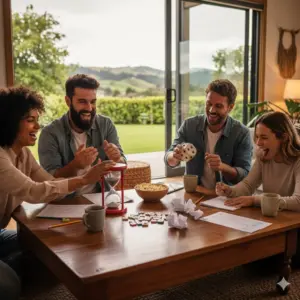

The market for board games for kids in New Zealand has reached a historic peak in 2026, driven by a surge in "analog" play as families seek quality time away from screens. For Kiwi parents, the landscape offers a sophisticated mix of international hits and locally developed gems like Mū Tōrere and Articulate NZ Edition. Standard pricing for popular titles like Sushi Go! or Outfoxed! typically ranges from $34.00 to $45.00 NZD, while premium strategy sets for older children can reach over $150.00 NZD. Whether you are looking for early-learning tools like First Times Tables or fast-paced family favorites like Ticket to Ride, the New Zealand hobby ecosystem provides a diverse range of products tailored to every developmental stage. This guide explores the best 2026 releases, educational benefits, and local retail tips for the ultimate family game night in Aotearoa.

Essential Benefits of Playing Board Games for Kids
Understanding the value of board games for kids goes far beyond simple entertainment. In the New Zealand educational context, board games are increasingly recognized for their ability to blend fun with critical life skills. These games act as a "perfect tool" for fostering social-emotional resilience, teaching children how to cope with setbacks and maintain a positive attitude in the face of a loss. Furthermore, they provide a much-needed break from digital entertainment, helping to improve a child's mood and focus while strengthening the family unit.
- Social Skills: Teaches turn-taking, sharing, and effective communication with peers and adults.
- Cognitive Development: Enhances critical thinking, memory, and spatial awareness through strategic play.
- Literacy & Numeracy: Introduces basic counting, probability, and vocabulary in a low-pressure environment.
- Fine Motor Skills: Helps develop coordination through the movement of game pieces, dice, and cards.
- Concentration: Naturally increases a child's attention span as they focus on the game's objectives and rules.
Social Skills: Teaches turn-taking, sharing, and effective communication with peers and adults.
Cognitive Development: Enhances critical thinking, memory, and spatial awareness through strategic play.
Literacy & Numeracy: Introduces basic counting, probability, and vocabulary in a low-pressure environment.
Fine Motor Skills: Helps develop coordination through the movement of game pieces, dice, and cards.
Concentration: Naturally increases a child's attention span as they focus on the game's objectives and rules.
Developmental Skills Summary
| Skill Category | Key Benefit | Example Game |
| Cognitive | Problem-solving & Strategy | Catan Junior |
| Social | Teamwork & Empathy | Outfoxed! |
| Physical | Fine motor skills | Jenga |
| Emotional | Resilience & Patience | 5 Second Rule Jr. |
Top Board Games for Younger Kids (Ages 3–7)
Selecting board games for kids for the youngest players requires a focus on tactile interaction and simple, intuitive rules. In 2026, "activity-based" games like Hungry Hungry Hippos and the classic Guess Who? are top sellers in New Zealand for their high energy and instant feedback. For children just beginning their board game journey, First Orchard serves as an ideal introductory activity because it teaches the mechanics of turn-taking and color recognition without the stress of intense competition.
- Outfoxed!: A premier cooperative detective game where players work together to eliminate suspects and catch the fox.
- Sushi Go!: An adorable, fast-paced card-drafting game where players pick and pass sushi cards to build a meal.
- Rhino Hero: A card-stacking game that develops dexterity and balance as players build a tower.
- Monopoly Junior: A simplified version of the real estate classic that introduces basic money math.
- Candy Land: A classic color-matching race game that requires no reading, perfect for preschoolers.
Outfoxed!: A premier cooperative detective game where players work together to eliminate suspects and catch the fox.
Sushi Go!: An adorable, fast-paced card-drafting game where players pick and pass sushi cards to build a meal.
Rhino Hero: A card-stacking game that develops dexterity and balance as players build a tower.
Monopoly Junior: A simplified version of the real estate classic that introduces basic money math.
Candy Land: A classic color-matching race game that requires no reading, perfect for preschoolers.
Best Early-Childhood Games in NZ
| Game Title | Recommended Age | Style | Price (approx. NZD) |
| Outfoxed! | 5+ Years | Cooperative | $45.00 |
| Sushi Go! | 6+ Years | Card Drafting | $34.99 |
| Guess Who? | 6+ Years | Logic / Deduction | $31.99 |
| Monopoly Junior | 5+ Years | Trading / Math | $34.99 |

Strategic Board Games for Older Kids (Ages 8–12)
As children grow, board games for kids transition into more complex strategy and resource management. The 2026 market in NZ is heavily influenced by "modern classics" like Ticket to Ride and Catan, which offer deeper decision-making without being overwhelming for middle-schoolers. These games often introduce concepts of "trading" and "long-term planning," as players must manage resources to build settlements or claim high-scoring routes.
- Ticket to Ride: A cross-country train adventure where players collect cards to claim railway routes.
- King of Tokyo: Players control giant monsters battling for the city using dice-rolling and power-ups.
- Splendor: An elegant engine-building game where players collect gems to attract nobles and earn prestige.
- Catan: The definitive modern trading game where players build settlements and trade resources.
- Carcassonne: A tile-placement game where players create a medieval landscape and score points with followers.
Ticket to Ride: A cross-country train adventure where players collect cards to claim railway routes.
King of Tokyo: Players control giant monsters battling for the city using dice-rolling and power-ups.
Splendor: An elegant engine-building game where players collect gems to attract nobles and earn prestige.
Catan: The definitive modern trading game where players build settlements and trade resources.
Carcassonne: A tile-placement game where players create a medieval landscape and score points with followers.
Strategy Game Comparison Table
| Game Title | Difficulty | Strategy Level | Primary Mechanic |
| Ticket to Ride | Easy | Moderate | Route Building |
| King of Tokyo | Easy | Low | Dice Battle |
| Splendor | Moderate | High | Engine Building |
| Catan | Moderate | High | Resource Trading |
The Rise of Cooperative Board Games for Kids
A significant trend in board games for kids for 2026 is the move away from cutthroat competition and toward "Cooperative" play. In these games, all players win or lose together as a team, which is particularly beneficial for younger children who struggle with the "confrontational" mechanisms found in some classic games. Cooperative games like Pandemic: Rapid Response or The Mind foster a collaborative environment where kids learn to value the input of their teammates to solve a common puzzle.
- Pandemic: Rapid Response: A real-time race against the clock to deliver life-saving supplies around the globe.
- The Mind: A silent cooperative game where players must place cards in ascending order without talking.
- Labyrinth: Chronicles: A 2026 refresh of the 80s classic featuring a 3D board and a new co-op campaign.
- Andor: The Family Fantasy Game: A cooperative adventure where heroes work together to defend a kingdom.
- Zombie Kidz Evolution: A "legacy" style cooperative game where players evolve their characters over multiple sessions.
Pandemic: Rapid Response: A real-time race against the clock to deliver life-saving supplies around the globe.
The Mind: A silent cooperative game where players must place cards in ascending order without talking.
Labyrinth: Chronicles: A 2026 refresh of the 80s classic featuring a 3D board and a new co-op campaign.
Andor: The Family Fantasy Game: A cooperative adventure where heroes work together to defend a kingdom.
Zombie Kidz Evolution: A "legacy" style cooperative game where players evolve their characters over multiple sessions.
Cooperative vs. Competitive Benefits
| Feature | Cooperative Games | Competitive Games |
| Teamwork | High (Vital for victory) | Variable (Often individual) |
| Emotional Impact | Low pressure / Shared joy | High stakes / Conflict management |
| Learning Goal | Negotiation & Collaboration | Strategic planning & Resilience |
| Key Example | Outfoxed! | Monopoly |

Educational and "STEM" Focused Games
Many board games for kids in New Zealand are specifically designed as "Learning Aids" to support the school curriculum. Retailers like The Toybox NZ and Creative Classrooms offer ranges that target literacy, numeracy, and emotional intelligence through playful mechanics. These "STEM" (Science, Technology, Engineering, and Maths) focused games are popular for their ability to make abstract concepts like multiplication or spatial logic tangible and fun for students.
- Magic Maths: An Orchard Toys favorite where players solve sums and rub "magic" heat-sensitive patches for answers.
- Match and Spell: A simple game that encourages letter recognition and word building for early readers.
- Smart Games (IQ Series): A series of single-player spatial puzzles that challenge logic and problem-solving.
- Numbers Bear Game: A focused numeracy game designed to help children with basic counting and addition.
- First Times Tables: A board game specifically created to make learning multiplication tables an engaging activity.
Magic Maths: An Orchard Toys favorite where players solve sums and rub "magic" heat-sensitive patches for answers.
Match and Spell: A simple game that encourages letter recognition and word building for early readers.
Smart Games (IQ Series): A series of single-player spatial puzzles that challenge logic and problem-solving.
Numbers Bear Game: A focused numeracy game designed to help children with basic counting and addition.
First Times Tables: A board game specifically created to make learning multiplication tables an engaging activity.
Top Educational Game Brands in NZ
| Brand | Primary Focus | Price Range (NZD) |
| Orchard Toys | Curriculum Support | $30 – $45 |
| Smart Games | Logic & Spatial Puzzles | $32 – $45 |
| Mattel Games | Classic Literacy & Math | $35 – $50 |
| Hasbro Gaming | Social & Logic Skills | $28 – $40 |
2026 Releases: New Board Games for Kids to Watch
The year 2026 is set to be a "major refresh" year for board games for kids, with several highly anticipated titles hitting Kiwi shelves. From story-based adventures like RoboMon to the 3D updates of 80s classics, the new releases are pushing the boundaries of interactive play. Many of these 2026 titles focus on "cosy" themes, allowing children to immerse themselves in friendly animal villages or story-driven quests.
- RoboMon: An ambitious title featuring "Pokémon-like" gameplay translated into a story-adventure board game.
- Everdell Emerland: A standalone spin-off set in a cosy jungle where capybaras and frogs build a village.
- Labyrinth: Chronicles: A modern take on the series with an entirely 3D labyrinth and co-op quest lines.
- Sanibel: The next big title from the designer of Wingspan, featuring a light-hearted, bright theme.
- Cozy Stickerville: A novel board game that utilizes sticker collecting as a core gameplay mechanic.
RoboMon: An ambitious title featuring "Pokémon-like" gameplay translated into a story-adventure board game.
Everdell Emerland: A standalone spin-off set in a cosy jungle where capybaras and frogs build a village.
Labyrinth: Chronicles: A modern take on the series with an entirely 3D labyrinth and co-op quest lines.
Sanibel: The next big title from the designer of Wingspan, featuring a light-hearted, bright theme.
Cozy Stickerville: A novel board game that utilizes sticker collecting as a core gameplay mechanic.
Most Anticipated 2026 Titles in NZ
| Game Title | Style | Key Feature |
| RoboMon | Adventure | Creature Collection |
| Everdell Emerland | Worker Placement | “Cosy” Jungle Theme |
| Labyrinth: Chronicles | Cooperative | 3D Gameboard |
| Witchbound | Open World | Narrative Adventure |

NZ Made and Cultural Board Games
New Zealand has a rich history of developing its own board games for kids that reflect local culture and geography. From the ancient Maori game of Mū Tōrere to modern trivia games, "NZ Editions" are a popular way for families to connect with their heritage. These games are often used in educational settings and as gifts that celebrate the "Kiwi" experience.
- Mū Tōrere: A traditional two-player board game from the North Island, tightly interwoven with history.
- Articulate NZ Edition: A fast-talking description game that features local New Zealand landmarks and people.
- Great Western Trail: New Zealand: A premium strategy game set in NZ’s pastoral landscapes.
- Raid the Pantry (10th Anniversary): A locally created cooking game that involves gathering ingredients and "raiding" others.
- Cathedral: A classic tile-placement game invented in NZ, focused on claiming territory within a walled city.
Mū Tōrere: A traditional two-player board game from the North Island, tightly interwoven with history.
Articulate NZ Edition: A fast-talking description game that features local New Zealand landmarks and people.
Great Western Trail: New Zealand: A premium strategy game set in NZ’s pastoral landscapes.
Raid the Pantry (10th Anniversary): A locally created cooking game that involves gathering ingredients and "raiding" others.
Cathedral: A classic tile-placement game invented in NZ, focused on claiming territory within a walled city.
Local NZ Game Spotlight
| Game Title | Origin | Age Range | Feature |
| Mū Tōrere | Traditional Maori | 6+ Years | 8-pointed star board |
| Poleconomy | NZ Invented | 10+ Years | Teaches economic interaction |
| Cathedral | NZ Invented | 8+ Years | 3D Wooden buildings |
| Raid the Pantry | NZ Created | 8+ Years | Cooking-themed fun |
How to Choose the Right Board Game for Your Family
Selecting the perfect board games for kids involves more than just reading the age on the box. New Zealand hobby experts suggest that the most successful game nights are those that match the family's schedule and the child's specific attention span. The "hybrid" trend in 2026—where physical boards link with mobile apps—is a great way to bridge the gap for tech-savvy children. Read more in Wikipedia.
- Check the Player Count: Ensure the game accommodates your full family size (e.g., 2–6 players).
- Consider Playtime: For younger kids, stick to games that finish in 15–20 minutes to maintain engagement.
- Watch Gameplay Videos: Platforms like YouTube provide a visual sense of the rules and setup before you buy.
- Safety First: Be mindful of small components that could be a choking hazard for toddlers in mixed-age homes.
- Trial and Error: Don't be afraid to experiment with different genres like "dice battle" or "creative storytelling".
Check the Player Count: Ensure the game accommodates your full family size (e.g., 2–6 players).
Consider Playtime: For younger kids, stick to games that finish in 15–20 minutes to maintain engagement.
Watch Gameplay Videos: Platforms like YouTube provide a visual sense of the rules and setup before you buy.
Safety First: Be mindful of small components that could be a choking hazard for toddlers in mixed-age homes.
Trial and Error: Don't be afraid to experiment with different genres like "dice battle" or "creative storytelling".
Buying Guide Checklist
| Factor | Consider… | NZ Expert Tip |
| Age | Rules complexity & reading level | Look for “Junior” versions of adult classics |
| Interest | Animals, monsters, or space | Engaging themes increase “buy-in” from kids |
| Duration | Quick vs. Long play sessions | Cooperative “race” games are often faster |
| Tech Level | Hybrid app integration vs. Analog | Apps can help manage rules for parents |

Top NZ Retailers for Board Games for Kids
Finding board games for kids in New Zealand is simple, with several major chains and independent specialists carrying the latest 2026 stock. While Toyworld NZ and The Warehouse are great for mass-market classics, specialty shops like Game Centre and Creative Classrooms offer a wider range of high-quality imports and locally made titles. Many of these stores offer "Click & Collect" and nationwide shipping to regional areas.
- Toyworld NZ: A premier destination for brands like LEGO, Pokémon, and classic Hasbro titles.
- Game Centre: Specialists in "NZ Made & Created" games and premium strategy titles.
- The Toybox NZ: A reliable online retailer for educational and "Smart Games" puzzles.
- Creative Classrooms: Focuses on educational games for schools and home learning.
- Card Merchant: A key player for TCG-related board games and family strategy hits.
Toyworld NZ: A premier destination for brands like LEGO, Pokémon, and classic Hasbro titles.
Game Centre: Specialists in "NZ Made & Created" games and premium strategy titles.
The Toybox NZ: A reliable online retailer for educational and "Smart Games" puzzles.
Creative Classrooms: Focuses on educational games for schools and home learning.
Card Merchant: A key player for TCG-related board games and family strategy hits.
Local Retailer Comparison
| Retailer | Primary Focus | Online Store |
| Toyworld NZ | Popular Brands & Toys | Yes |
| Game Centre | NZ Made & Strategy | Yes |
| Creative Classrooms | Educational / Schools | Yes |
| The Toybox NZ | STEM / Logic Games | Yes |
Maintenance and Organization of Your Collection
Once you have built a collection of board games for kids, keeping them organized is key to ensuring they actually get played. In the NZ climate, wood components and cardboard boxes can be sensitive to humidity, so storing them in a dry, vertical fashion (like books) is recommended to prevent warping. For families with younger children, "Game Organization" often involves keeping small pieces in labeled ziplock bags within the original box to prevent losses.
- Vertical Storage: Makes games easier to see and retrieve without toppling a stack.
- Bagging Components: Use small resealable bags for dice, meeples, and tiles to avoid loose pieces.
- Laminating Rules: For frequently played games, laminating the rule sheet prevents wear and tear.
- Periodic Inventory: Check for lost pieces after every "Game Night" to ensure sets remain playable.
- The "One-In, One-Out" Rule: To manage space, consider donating older games to local NZ charities or schools as kids outgrow them.
Vertical Storage: Makes games easier to see and retrieve without toppling a stack.
Bagging Components: Use small resealable bags for dice, meeples, and tiles to avoid loose pieces.
Laminating Rules: For frequently played games, laminating the rule sheet prevents wear and tear.
Periodic Inventory: Check for lost pieces after every "Game Night" to ensure sets remain playable.
The "One-In, One-Out" Rule: To manage space, consider donating older games to local NZ charities or schools as kids outgrow them.

The Future of Tabletop Gaming in Aotearoa
The future of board games for kids in New Zealand looks bright, with a growing emphasis on sustainability and "hybrid" technology. We are seeing a move toward "modular production" and the use of responsibly sourced wood and recyclable cardboard in NZ manufacturing. As we move further into 2026, the focus remains on high-quality components and games that provide "real-world" social connections in an increasingly digital world.
- Sustainability: Manufacturers are shifting to lower-impact plastics and FSC-certified wood.
- Hybrid Gaming: More physical boards are integrating with AR and smartphone apps for updated content.
- Subscription Models: The rise of monthly "curated game boxes" that introduce new titles to Kiwi households.
- Narrative Engagement: A focus on games that offer deeper stories and immersive thematic settings.
Sustainability: Manufacturers are shifting to lower-impact plastics and FSC-certified wood.
Hybrid Gaming: More physical boards are integrating with AR and smartphone apps for updated content.
Subscription Models: The rise of monthly "curated game boxes" that introduce new titles to Kiwi households.
Narrative Engagement: A focus on games that offer deeper stories and immersive thematic settings.
Future Gaming Trends Summary
| Trend | Impact | Key Indicator |
| Hybrid Formats | Higher engagement | AR/QR Tie-ins |
| Regional Sourcing | Faster restocks | Modular production |
| Narrative Games | Deeper immersion | Storybook adventure mechanics |
| Subscriptions | Easier discovery | Monthly curated boxes |
Final Thoughts
The world of board games for kids in New Zealand for 2026 is a vibrant and essential part of modern family life. By offering a tactile alternative to digital screens, these games foster the critical social, cognitive, and emotional skills that Kiwi kids need for the future. Whether you are helping a 4-year-old navigate Candy Land or strategizing with a teen in Ticket to Ride, the simple joy of a shared board game night creates lasting memories and "childhood magic" that no app can replicate. As the New Zealand market continues to innovate with localized themes and educational tools, there has never been a better time to clear the dinner table and roll the dice.
FAQ
What is the best board game for younger kids in NZ? Outfoxed! is widely considered one of the best for ages 5+ as it teaches cooperation and deduction without competitive pressure.
Where can I buy educational board games for kids in NZ? The Toybox NZ and Creative Classrooms offer specialized ranges of educational and "Smart Games" puzzles.
What are the best cooperative board games for families? Top choices for 2026 include Pandemic: Rapid Response, The Mind, and the newly refreshed Labyrinth: Chronicles.
How much do board games for kids typically cost in New Zealand? Prices range from $20 for simple activities like Snakes and Ladders to $155 for premium strategy titles like Great Western Trail New Zealand.
Are there board games specifically about New Zealand? Yes, localized versions of classics like Monopoly New Zealand Edition and locally created games like Articulate NZ are popular choices.
What is a "hybrid" board game? It is a game that combines physical board pieces with digital elements like smartphone apps or AR to enhance gameplay and provide real-time updates.
Can 3-year-olds play board games for kids? Yes, games like First Orchard or The Color Monster are designed specifically for preschoolers to learn basic turn-taking and emotional development.
What is the "One-Eyed Jack" rule in Sequence? (Incorrect context) In many strategy games, specific rules allow for removing opponent pieces, which is great for teaching resilience.
What is the "TAG Rigid Deck Box"? (Incorrect context) This refers to card grading protection; however, for board games, using labeled bags for pieces is the standard for organization.
What new board games for kids are coming out in 2026? Highly anticipated titles include RoboMon, Everdell Emerland, and Sanibel.