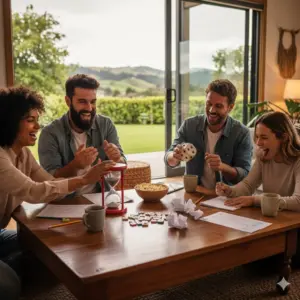

The card games nz landscape is a vibrant tapestry that blends historical British roots with unique Māori traditions and a rapidly accelerating modern competitive scene. In 2026, New Zealanders are engaging with card games more than ever, from traditional whānau gatherings playing Last Card to massive international tournaments for the Pokémon Trading Card Game and Magic: The Gathering. Historically, card games arrived with British settlers in the 19th century, serving as essential entertainment in a new colony with few leisure options. Today, the scene is defined by a "seismic acceleration" in event attendance, with the Auckland Card Show 2025 attracting over 5,800 participants. Whether you are looking for classic trick-taking games like 500, family-friendly Māori language games like Tākaro!, or the latest One Piece card releases, the New Zealand market offers a robust ecosystem supported by local hobby stores and a passionate community of players.

Exploring the Core Traditions of NZ Card Gaming
New Zealand's affinity for card games nz is deeply rooted in social connection and history. Traditional games like 500, often referred to as the national card game of Australia and similarly beloved in NZ, have been staples of rural and urban social clubs for over a century. These games often involve intricate signaling systems and partnerships, which were famously used by Kiwi troops during the World Wars to bypass boredom in the trenches. In modern homes, "social gaming" remains the primary driver, with classics like Euchre and Cribbage still frequently played in pubs and boarding houses across the South and North Islands.
- 500: A skillful trick-taking game where players bid for the number of tricks their partnership can achieve.
- Last Card: The most popular informal game in NZ, similar to Uno, often played by all age groups.
- Euchre: A trick-taking game for four players in fixed partnerships, extremely popular in social tournament settings.
- Whist: A classic partnership game from which many other trick-taking games are derived.
- Cribbage: A classic game based on card combinations worth points, scored using a specialized "pegging" board.
500: A skillful trick-taking game where players bid for the number of tricks their partnership can achieve.
Last Card: The most popular informal game in NZ, similar to Uno, often played by all age groups.
Euchre: A trick-taking game for four players in fixed partnerships, extremely popular in social tournament settings.
Whist: A classic partnership game from which many other trick-taking games are derived.
Cribbage: A classic game based on card combinations worth points, scored using a specialized "pegging" board.
Most Popular Traditional Card Games in New Zealand
| Game Title | Number of Players | Type | Key NZ Market Driver |
| 500 | 4 (Partnerships) | Trick-taking | Historical Legacy |
| Last Card | 2–6+ | Shedding | Social Interaction |
| Euchre | 4 | Trick-taking | Tournament Play |
| Cribbage | 2–4 | Matching/Scoring | Pub Culture |
| Poker | 2–10 | Gambling/Skill | Casino Growth |
Indigenous Māori Card Game Innovations
A unique and growing sector of card games nz is the development of indigenous-themed and te reo Māori games. While traditional Māori games like Mū Tōrere were board-based, the 21st century has seen a surge in "language-learning" card games designed to normalize te reo Māori in a fun, competitive environment. The most notable example is Tākaro!, a symbol-matching game that requires players to call out translations to win rounds, effectively expanding the vocabulary of the whole whānau. These games have become essential tools in New Zealand schools and homes, bridging the gap between ancient culture and modern tabletop entertainment.
- Tākaro!: A rapid symbol-matching game available in original and "Into the Wild" editions.
- Go Fish (Te Reo Edition): A localized version of the classic childhood game focusing on emotions and basic phrases.
- Religious Symbology: Historically, some Māori religious movements even adopted images from standard playing cards as sacred symbols.
- Mathematical Learning: Traditional games like Mū Tōrere are now used globally, including at US universities, to teach complex mathematics.
- Memory Games: Themed sets like "Bits and Bobs" or "Actions" help children learn Māori words for daily objects.
Tākaro!: A rapid symbol-matching game available in original and "Into the Wild" editions.
Go Fish (Te Reo Edition): A localized version of the classic childhood game focusing on emotions and basic phrases.
Religious Symbology: Historically, some Māori religious movements even adopted images from standard playing cards as sacred symbols.
Mathematical Learning: Traditional games like Mū Tōrere are now used globally, including at US universities, to teach complex mathematics.
Memory Games: Themed sets like "Bits and Bobs" or "Actions" help children learn Māori words for daily objects.
Top Māori-Themed and Language Games
| Game Title | Goal | Age Range | Language Focus |
| Tākaro! | Match symbols and call out names | 4+ Years | 57 various symbols |
| Te Reo Memory | Match actions or emotions | 4+ Years | Daily verbs and feelings |
| Mū Tōrere | Trap the opponent’s pieces | All Ages | Strategy and Logic |
| Te Reo Dice | Game variations using numbered dice | All Ages | Māori numbers 1–12 |
The 2026 Trading Card Game (TCG) Market Leaders
In 2026, the card games nz market is dominated by global Trading Card Game franchises that blend collectibility with high-stakes competitive play. Pokémon remains the undisputed volume leader in New Zealand, driven by its 30th-anniversary celebrations and the massive success of the "booster pack opening" culture. Magic: The Gathering (MTG) continues to lead the competitive sector, particularly for players who value "Competitive Integrity" and high-quality card stock. Additionally, "independent" IPs like One Piece and Disney Lorcana have gained significant traction among Kiwi hobbyists due to their high visual fidelity and thematic appeal.
- Pokémon TCG: The top-ranked game in NZ for collectibility and holographic "chase" cards.
- Magic: The Gathering: Favored by serious competitors for its complex strategy and 330gsm Blue Core card stock.
- Yu-Gi-Oh!: Unique for its "Mini" size (59mm x 86mm), optimizing the speed of play preferred by younger demographics.
- One Piece Card Game: Known for its High-Gloss UV Coating that enhances color vibrancy for collectors.
- Disney Lorcana: Appeals to family-oriented demographics with its "storybook" aesthetic and matte varnish.
Pokémon TCG: The top-ranked game in NZ for collectibility and holographic "chase" cards.
Magic: The Gathering: Favored by serious competitors for its complex strategy and 330gsm Blue Core card stock.
Yu-Gi-Oh!: Unique for its "Mini" size (59mm x 86mm), optimizing the speed of play preferred by younger demographics.
One Piece Card Game: Known for its High-Gloss UV Coating that enhances color vibrancy for collectors.
Disney Lorcana: Appeals to family-oriented demographics with its "storybook" aesthetic and matte varnish.
NZ TCG Market Driver Comparison (2026)
| Rank | Game Title | Primary Market Driver | Common NZ Sizing |
| 1 | Pokémon TCG | Collectibility | Standard (63x88mm) |
| 2 | Magic: The Gathering | Competitive Integrity | Standard (63x88mm) |
| 3 | Yu-Gi-Oh! | Brand Identity | Mini (59x86mm) |
| 4 | One Piece | Visual Fidelity | Standard (63x88mm) |
| 5 | Star Wars: Unlimited | Tactile Feel | Standard (63x88mm) |
Competitive Tournaments: The NZ "Open" Circuit
The professional landscape for card games nz has matured into a sophisticated circuit of "Open" and "Championship" events. The 2026 New Zealand OPEN for Yu-Gi-Oh! at the Auckland Showgrounds is a premier example, requiring players to register via smartphone apps and compete for prizes like trophies and Nintendo Switch 2 consoles. These events draw hundreds of "Duelists" from across the country, featuring "Advanced Constructed" formats and rigorous deck list submissions. Similarly, the Pokémon Special Championships in Henderson serve as a critical gateway for Kiwi players to earn Championship Points required for the World Championships.
- Auckland Card Show: The largest event in the Southern Hemisphere, returning to Auckland Showgrounds in August 2026.
- OTS Championships: Local "Official Tournament Store" events that act as qualifiers for national levels.
- Swiss Rounds: Most NZ competitive events utilize a Swiss-style pairing system followed by a "Top Cut" single-elimination.
- Prize Structures: Winners often receive exclusive oversized cards, regional deck boxes, and dozens of booster packs.
- Digital Integration: Competitive players now rely on apps like NEURON for tournament registration and deck building.
Auckland Card Show: The largest event in the Southern Hemisphere, returning to Auckland Showgrounds in August 2026.
OTS Championships: Local "Official Tournament Store" events that act as qualifiers for national levels.
Swiss Rounds: Most NZ competitive events utilize a Swiss-style pairing system followed by a "Top Cut" single-elimination.
Prize Structures: Winners often receive exclusive oversized cards, regional deck boxes, and dozens of booster packs.
Digital Integration: Competitive players now rely on apps like NEURON for tournament registration and deck building.
Key 2026 Tournament Stats for NZ
| Event Name | Date | City | Attendance Cap |
| Auckland Pokémon Special | Jan 24–25, 2026 | Auckland | 500+ |
| NZ OPEN: Duelist’s Advance | Aug 9, 2025* | Auckland | 300 |
| Auckland Card Show | Aug 15–16, 2026 | Auckland | 6,000+ |
| One Piece Regionals | Seasonal (2026) | Nationwide | Varies |

History of Local Card Manufacturing in New Zealand
The story of card games nz includes a fascinating chapter on domestic manufacturing, led by Whanganui printer Archibald Dudingston Willis. In the 1880s, Willis became the only manufacturer of playing cards in the Southern Hemisphere, launching with court designs inspired by the New York Consolidated Card Company. These early NZ-made cards were significant for their intricate reverse designs featuring native birds like the tui and kereru, intended to hide wear and prevent "card sharps" from identifying specific cards. While manufacturing moved to larger international hubs in the mid-20th century, the legacy of NZ-themed playing cards continues to reside in homes across the country. Read more in Wikipedia.
- A.D. Willis Ltd: The first New Zealand brand of playing cards, manufactured in Whanganui.
- Court Designs: Recognized for multi-colored enamel illustrations and rounded corners.
- Evolution: Transitioned from four-color to two-color (black and red) versions in the early 20th century.
- Willis Print Ltd: Continued operations through the 1940s before rights were sold to Weeks Ltd and later Kiwi Packaging.
- Gambling Prohibition: In 1878, card-playing on the railway between Napier and Waipukurau was strictly forbidden and punishable by a £5 fine.
A.D. Willis Ltd: The first New Zealand brand of playing cards, manufactured in Whanganui.
Court Designs: Recognized for multi-colored enamel illustrations and rounded corners.
Evolution: Transitioned from four-color to two-color (black and red) versions in the early 20th century.
Willis Print Ltd: Continued operations through the 1940s before rights were sold to Weeks Ltd and later Kiwi Packaging.
Gambling Prohibition: In 1878, card-playing on the railway between Napier and Waipukurau was strictly forbidden and punishable by a £5 fine.
Gambling and the Legal Evolution of NZ Card Play
Gambling has always been a controversial but undeniable part of the card games nz narrative. In the 19th century, card games for money were a favorite pastime across all social classes, from sheep-station owners playing Loo in gentlemen's clubs to Māori "card schools" held in private houses. High-stakes games were common, with Charles Suisted, the proprietor of Wellington's first hotel, allegedly winning the lease of the building in a game of cards. It wasn't until the 1990s, with the opening of the first licensed casino in Christchurch, that gambling on card games became widely accepted and regulated in New Zealand.
- ** Gentlemen's Clubs**: Establishments in main centers where the urban elite played Poker, Whist, and Twenty-One.
- Julius Vogel: A former NZ Premier described as a highly skilled player of "unlimited loo".
- Sky City Casino: Launched NZ's first training school for poker dealers in 2009 and runs the massive "Festival of Poker".
- Paul Pedersen: A Whanganui sheep farmer who became one of the first Kiwis to compete in the World Series of Poker in Las Vegas.
- Online Casinos: Modern NZ players now have access to localized mobile platforms offering Blackjack and Baccarat with sign-up bonuses.
** Gentlemen's Clubs**: Establishments in main centers where the urban elite played Poker, Whist, and Twenty-One.
Julius Vogel: A former NZ Premier described as a highly skilled player of "unlimited loo".
Sky City Casino: Launched NZ's first training school for poker dealers in 2009 and runs the massive "Festival of Poker".
Paul Pedersen: A Whanganui sheep farmer who became one of the first Kiwis to compete in the World Series of Poker in Las Vegas.
Online Casinos: Modern NZ players now have access to localized mobile platforms offering Blackjack and Baccarat with sign-up bonuses.
Landmark Dates in NZ Gambling History
| Year | Event | Significance |
| 1851 | First anti-gambling warnings published in Māori | Social stigma awareness |
| 1878 | Railway card-playing ban in Hawke’s Bay | Public regulation effort |
| 1990s | First licensed casino opens in Christchurch | Legalization and mainstreaming |
| 2008 | First “Festival of Poker” at Sky City | Growth of professional tournament scene |
The Modern Party Game Explosion in NZ
Beyond traditional and trading games, the card games nz scene has been redefined by the "Party Game" explosion of the last decade. Games like Cards Against Humanity (particularly the Family Edition) and Exploding Kittens have become staples of Kiwi social life. These games prioritize humor, rapid play, and "house rules," making them ideal for mixed groups of friends or whānau gatherings. Modern NZ retailers now stock a massive variety of these titles, often categorized by their "social energy" and adult content ratings.
- Cards Against Humanity: A dark, satirical game that has developed a massive cult following in NZ cities like Auckland.
- Taco Cat Goat Cheese Pizza: A high-energy, fast-paced game that has become a best-seller in NZ toy stores.
- Sushi Go!: A "pick and pass" card game that introduces younger players to drafting mechanics in under 15 minutes.
- Dutch Blitz: A fast-moving game that is frequently sold out in local hobby shops due to high demand.
- Exploding Kittens: A strategic "Russian Roulette" card game that retails for approximately $46 NZD in local stores.
Cards Against Humanity: A dark, satirical game that has developed a massive cult following in NZ cities like Auckland.
Taco Cat Goat Cheese Pizza: A high-energy, fast-paced game that has become a best-seller in NZ toy stores.
Sushi Go!: A "pick and pass" card game that introduces younger players to drafting mechanics in under 15 minutes.
Dutch Blitz: A fast-moving game that is frequently sold out in local hobby shops due to high demand.
Exploding Kittens: A strategic "Russian Roulette" card game that retails for approximately $46 NZD in local stores.
Most Popular Party and Modern Social Games
| Game Title | Typical Price (NZD) | Best For… | Player Count |
| Taco Cat Goat Cheese Pizza | $23.00 | Parties / High Energy | 3–8 |
| Sushi Go! | $29.00 | Families / Beginners | 2–5 |
| Exploding Kittens | $46.00 | Strategy / Humor | 2–5 |
| Cards Against Humanity | $65.00+ | Adults / Satire | 4–20+ |
Digital Card Gaming Trends in Aotearoa
In 2026, card games nz are increasingly experienced through digital platforms and mobile apps. New Zealanders are heavy users of digital card "patience" games, with titles like Solitaire Clash and Uno! regularly topping the App Store charts. Furthermore, the competitive TCG community has embraced "Phygital" play, where physical booster pack codes are redeemed in apps like Pokémon TCG Pocket to build digital collections. This hybrid model allows Kiwi players to practice their skills on their morning commute before heading to a physical "Hobby League" session at night.
- Mobile Casinos: Local apps allow players to enjoy Blackjack and Rummy with touch-friendly interfaces.
- E-Tournament Support: Apps like NEURON (Konami) are now mandatory for registering for professional NZ events.
- Community Groups: Meetup groups in Auckland and Wellington use digital platforms to organize face-to-face nights for games like Canasta and Hearts.
- Online Rewards: Digital card gaming in NZ often includes generous bonuses like sign-up matches and free chips.
- Social Casino Apps: Trending titles like Jackpot Party and Modo Casino provide a Las Vegas experience without leaving the house.
Mobile Casinos: Local apps allow players to enjoy Blackjack and Rummy with touch-friendly interfaces.
E-Tournament Support: Apps like NEURON (Konami) are now mandatory for registering for professional NZ events.
Community Groups: Meetup groups in Auckland and Wellington use digital platforms to organize face-to-face nights for games like Canasta and Hearts.
Online Rewards: Digital card gaming in NZ often includes generous bonuses like sign-up matches and free chips.
Social Casino Apps: Trending titles like Jackpot Party and Modo Casino provide a Las Vegas experience without leaving the house.

Essential Retailers and Community Hubs
Finding the right place to buy and play card games nz is key to joining the community. New Zealand is home to several specialized "Hobby Stores" that provide both the latest stock and space for organized play. Major retailers like JB Hi-Fi and Paper Plus also stock a significant range of TCGs and board games, but the "heart" of the scene remains in independent venues like Card Merchant and Dice Goblin.
- Card Merchant West City: A premier hub for Auckland-based Pokémon and Grand Archive championships.
- TCG Collector NZ: A specialist store focusing on singles and sealed products for Yu-Gi-Oh! and Pokémon.
- Dice Goblin: An Auckland-based community group focused on both trading card and board games.
- Paper Plus: A reliable source for Māori-language games like Te Reo Tākaro! and localized trivia.
- JB Hi-Fi NZ: Currently stocks over 40 different expansion packs and TCG accessories.
Card Merchant West City: A premier hub for Auckland-based Pokémon and Grand Archive championships.
TCG Collector NZ: A specialist store focusing on singles and sealed products for Yu-Gi-Oh! and Pokémon.
Dice Goblin: An Auckland-based community group focused on both trading card and board games.
Paper Plus: A reliable source for Māori-language games like Te Reo Tākaro! and localized trivia.
JB Hi-Fi NZ: Currently stocks over 40 different expansion packs and TCG accessories.
Top Retailers for Card Games in NZ
| Retailer | Specialization | Locations |
| Card Merchant | TCG / Championships | Auckland, WLG, Christchurch |
| TCG Collector NZ | Rare Singles / Yu-Gi-Oh! | Online / Regional |
| JB Hi-Fi | Mass-market TCG / Accessories | Nationwide |
| Paper Plus | Traditional / Te Reo Games | Nationwide |
The Future of Card Games in New Zealand
The future of card games nz looks brighter than ever as we move deeper into 2026. The scene is transitioning from simple pastimes into a multi-million dollar industry encompassing professional sports, educational tools, and high-value collectibles. We are seeing a move toward more "durable" card stock (like 330gsm Black Core) to meet the demands of frequent social play, alongside a resurgence of locally designed games that celebrate the unique New Zealand landscape and culture. As the "acceleration" continues, card gaming will likely remain a cornerstone of Kiwi social life, offering a tactile and meaningful way to connect in an increasingly digital world.
- Sustainability: Increasing demand for plastic-free packaging and recycled card stock in the NZ hobby market.
- Professionalization: The rise of "professional" Kiwi players earning substantial prizes at events like the Auckland Card Show.
- Cultural Normalization: Continued growth of Māori language games in early childhood education.
- Technological Integration: AR (Augmented Reality) features becoming more common in physical card games to enhance storytelling.
Sustainability: Increasing demand for plastic-free packaging and recycled card stock in the NZ hobby market.
Professionalization: The rise of "professional" Kiwi players earning substantial prizes at events like the Auckland Card Show.
Cultural Normalization: Continued growth of Māori language games in early childhood education.
Technological Integration: AR (Augmented Reality) features becoming more common in physical card games to enhance storytelling.
Final Thoughts
From the historic Whanganui-made decks of the 1880s to the high-tech championships of 2026, card games nz have remained a vital part of the New Zealand identity. Whether you are strategizing in a round of 500 at a social club, learning new Māori words with Tākaro!, or hunting for a rare holographic Charizard in Auckland, the world of cards provides endless opportunities for skill, luck, and most importantly, connection. As the scene continues to accelerate across the country, there has never been a better time to shuffle the deck and deal a hand in Aotearoa.
Frequently Asked Questions
What is the most popular card game in New Zealand? While 500 is often called the national game, Last Card is arguably the most widely played informal game across all age groups.
Where can I play competitive Pokémon in Auckland? Card Merchant West City in Henderson is a primary hub for Special Championships and Regional events.
Are there card games specifically designed to learn Māori? Yes, games like Tākaro! and Te Reo Memory are specifically designed to help whānau learn te reo Māori vocabulary through play.
What is the difference between a "Standard" and "Mini" card size? Standard (63x88mm) is used for Pokémon and MTG, while Mini (59x86mm) is the unique size used for Yu-Gi-Oh!.
How much do booster packs typically cost in NZ? Prices vary, but standard expansion packs for major TCGs typically retail between $10 and $15 NZD.
Is gambling on card games legal in NZ? Yes, but it is strictly regulated. Licensed casinos in cities like Christchurch and Auckland are the primary legal venues.
Who was the first playing card manufacturer in NZ? A.D. Willis in Whanganui was the first and, at one point, the only manufacturer in the Southern Hemisphere in the 1880s.
What is the "Auckland Card Show"? It is New Zealand's biggest card event, attracting thousands of collectors and players for TCGs and sports cards.
Can I buy card games at JB Hi-Fi? Yes, JB Hi-Fi NZ stocks a wide range of trading card games, base sets, and expansion packs.
What is the winning score in a game of Cribbage? The traditional aim is to be the first to reach 121 points, scored by pegging on a specialized board.