Trading card games — usually shortened to TCGs — are games played with collectible cards that each carry their own artwork, statistics and abilities. Trading card games in New Zealand bring together Pokémon trainers, Magic: The Gathering players and collectors chasing rare foil cards, alongside a genuine local success story in Flesh and Blood, a game designed in Auckland. This guide explains what trading card games are, which ones are popular here, where to buy them, what they typically cost, and how collecting, grading and competitive play work for players across Aotearoa.
Key Points
- A trading card game (TCG) is played with collectible cards sold in randomised packs; players build their own decks and trade cards to complete them.
- Pokémon is the most popular TCG in New Zealand, ahead of Magic: The Gathering and Yu-Gi-Oh!.
- Flesh and Blood is designed by Legend Story Studios in Auckland, making New Zealand the home of a globally played game.
- Cards are sold by specialist shops, general retailers and online; prices range from a few dollars per pack to thousands for rare graded singles.
- Protect cards with sleeves and binders, and use professional grading only for the most valuable cards.
- Competitive play follows each game’s own legality rules, which rotate over time — check the current list before a tournament.
What is a trading card game?
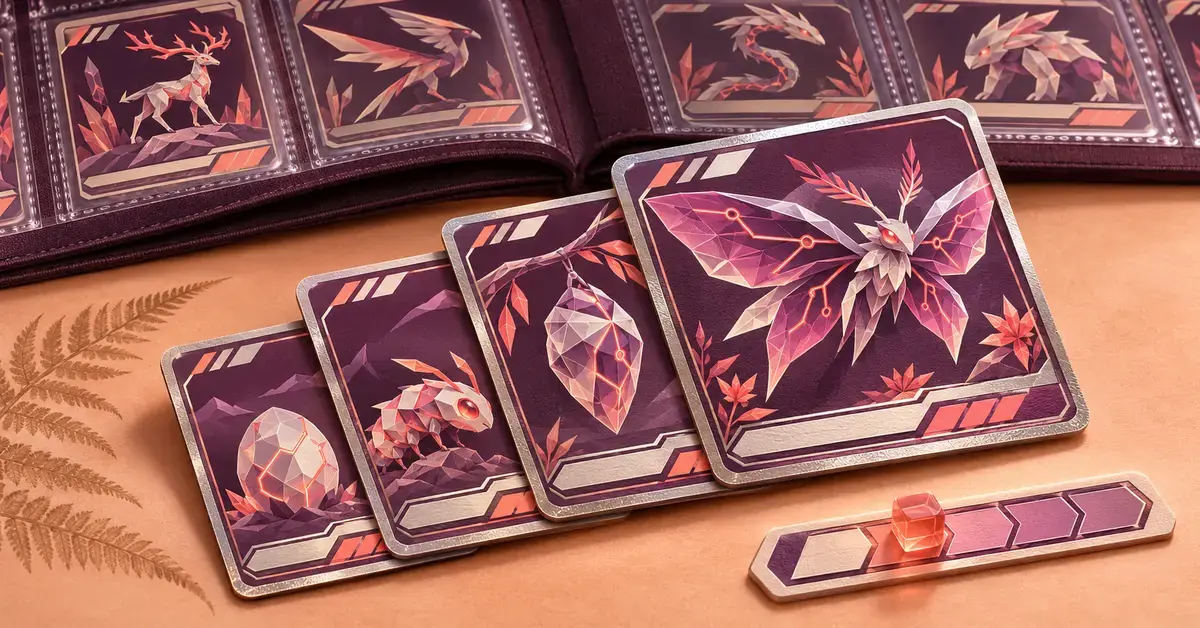
A trading card game is a strategy game in which each player builds a personal deck from a large pool of available cards and then uses that deck to play against others. The word “trading” matters: cards are sold in randomised packs, so no two collections are the same, and players swap, buy and sell cards to complete the deck they want. This is what separates a TCG from a traditional boxed game such as Uno, where every copy contains the same fixed set of cards.
A few terms come up constantly, so it helps to know them from the start:
- Booster pack — a sealed pack of randomised cards, usually around 10–15 cards, with the specific contents unknown until you open it.
- Rarity — a card’s scarcity, often shown by a symbol. Common cards appear in almost every pack; rare, holographic or “chase” cards appear far less often and are the most sought after.
- Single — an individual card bought on its own rather than in a pack, which lets you acquire exactly the card you need.
- Meta — short for “metagame”, the set of decks and strategies that are currently strongest in competitive play.
Most people enter the hobby in one of two ways: as players, who care about building decks and winning games, or as collectors, who value cards for their artwork, condition and scarcity. Many New Zealanders happily do both.
The main trading card games in New Zealand

Several international TCGs are easy to find in New Zealand, each with its own style and community. Pokémon is the most visible, helped by the Pokémon franchise marking its 30th anniversary in 2026, but it is far from the only option.
- Pokémon TCG — the most widely collected game in the country, popular with children, families and serious collectors alike.
- Magic: The Gathering — the original trading card game and a favourite among players who enjoy deep, competitive deck building.
- Yu-Gi-Oh! — known for fast, combo-driven duels and a dedicated long-term fan base.
- One Piece Card Game — a newer release that has grown quickly on the back of the anime’s popularity.
- Flesh and Blood — the New Zealand–designed game, covered in more detail below.
- Disney Lorcana and Star Wars: Unlimited — recent arrivals that have broadened the audience beyond the long-established titles.
The table below compares the main games so you can see how they differ at a glance. If you are completely new to the hobby, our beginner’s guide to TCG collecting in New Zealand is a good companion to this overview, and Pokémon fans can go deeper with our guide to collecting Pokémon cards in Aotearoa.
Game Comparison
| Game | Publisher | First released | Card size | Known for |
|---|---|---|---|---|
| Pokémon TCG | The Pokémon Company | 1996 | Standard (63×88 mm) | Collectibility and broad family appeal |
| Magic: The Gathering | Wizards of the Coast | 1993 | Standard (63×88 mm) | Deep, long-running competitive play |
| Yu-Gi-Oh! | Konami | 1999 | Mini (59×86 mm) | Fast, combo-driven duels |
| One Piece Card Game | Bandai | 2022 | Standard (63×88 mm) | Rapidly growing anime-based game |
| Flesh and Blood | Legend Story Studios (NZ) | 2019 | Standard (63×88 mm) | New Zealand–designed, store-focused play |
| Disney Lorcana | Ravensburger | 2023 | Standard (63×88 mm) | Disney characters and artwork |
| Star Wars: Unlimited | Fantasy Flight Games | 2024 | Standard (63×88 mm) | Star Wars theme and multiplayer-friendly play |
Flesh and Blood: a New Zealand original
New Zealand holds a unusual place in the global hobby as the home of Flesh and Blood, a trading card game created by Auckland-based Legend Story Studios. The game was designed by the studio’s founder, James White, a former competitive Magic: The Gathering player, and its first set, Welcome to Rathe, was released worldwide in October 2019. Flesh and Blood casts each player as a hero — such as Dorinthea or Iyslander — who battles using weapons, equipment and action cards.
What makes the game notable is both its design and its reach. Rather than selling single cards directly to players, Legend Story Studios built its organised play around local hobby shops, and the game is now played in thousands of stores across dozens of countries. For New Zealand players it is a rare chance to take part in a globally competitive game that was conceived and developed here. You can read about sets, rules and events on the official Flesh and Blood website.
Where to buy trading cards in New Zealand

Trading cards are sold through a mix of specialist hobby stores, general retailers and online marketplaces. Specialist shops are usually the best starting point because staff can explain formats, stock singles and accessories, and often host games and events.
- Card Merchant — a long-running New Zealand retailer that carries Pokémon, Magic, Yu-Gi-Oh! and more, with physical stores in the Auckland region and Wellington as well as an online shop.
- Otakumart — an online retailer operating from South Auckland that stocks Pokémon, Magic, Yu-Gi-Oh! and other TCGs and ships nationwide.
- Mighty Ape and other general retailers — large online and in-store sellers that carry mainstream sealed products, which is handy for popular Pokémon releases.
- The official Pokémon Center online store — which launched for New Zealand and Australia, selling official sealed product and accessories.
- Your local game store (LGS) — independent shops around the country that run weekly events and are often the easiest way to meet other players.
For second-hand cards, bulk lots and collections, Trade Me, New Zealand’s own marketplace, is widely used. If you are considering importing cards, be aware of shipping costs, GST and customs — our guide to buying through TCGplayer from New Zealand explains how overseas marketplaces work for Kiwi buyers.
What trading cards cost in New Zealand
Prices vary widely by game, set, rarity and retailer, and they change frequently, so treat the ranges below as a general guide rather than fixed figures. Always compare a few sellers before buying, and check the current recommended retail price for newly released sealed product.
- Single booster pack — the cheapest way to try a game, typically in the region of NZ$8–$12.
- Elite Trainer Box / boxed set — a bundle of packs plus accessories such as sleeves and dice, usually tens of dollars depending on the game and set.
- Booster box — a full case of sealed packs aimed at serious players and collectors, often well over NZ$150.
- Pre-constructed (ready-to-play) deck — a sealed deck designed to be played straight out of the box, a budget-friendly entry point for most games.
- Singles — individual cards, from a few cents for commons up to hundreds or thousands of dollars for rare, high-grade cards.
The secondary market for valuable cards moves quickly, and condition has a large effect on price. Tools such as price-tracking sites help you judge whether a card is fairly priced — our overview of tracking TCG values with PriceCharting covers this, and for the top end of the market see our guide to buying high-value single cards in New Zealand.
Collecting, grading and protecting your cards
If you plan to keep cards long-term, protection is worth the small cost. Basic steps go a long way:
- Sleeves — thin plastic covers that protect cards during play and storage. Inexpensive “penny sleeves” suit bulk cards, while thicker deck-protector sleeves are made for shuffling in tournaments.
- Toploaders and card savers — rigid plastic holders used to protect valuable singles, especially when posting trades.
- Binders and pages — folders with pocketed pages for organising and displaying collections; higher-end binders use side-loading pockets to reduce the risk of cards slipping out.
For the most valuable cards, many collectors use professional grading. A grading company inspects a card, assigns a numeric score for condition (commonly on a 1–10 scale) and seals it in a tamper-evident case known as a “slab”. Well-known services include PSA, Beckett (BGS) and newer entrants such as TAG. A high grade can significantly increase a card’s value and makes authenticity easier to prove. Because the major graders are based overseas, New Zealand collectors often submit cards through group submission services to share shipping and insurance costs.
Competitive and organised play

Beyond collecting, New Zealand has an active competitive scene. Most organised play happens at local game stores, which run casual nights, league play and sanctioned tournaments, with larger regional and national events held throughout the year. Common event types include:
- Prerelease and “build-and-battle” events — held around a new set’s launch, where players open fresh packs and build a deck on the spot.
- Store-level tournaments — weekly or monthly events that are the usual entry point to competitive play.
- Regional and national championships — higher-stakes events that can award ranking points toward international play.
Each game sets its own rules about which cards are legal in its main competitive (“Standard”) format, and these rotate over time. In the Pokémon TCG, for example, legality is shown by a small regulation mark printed on each card. For the 2026 season the format rotated in April 2026: cards with the “G” mark are no longer legal in Standard, while cards marked “H”, “I” and “J” (and newer marks) remain legal. If you intend to play competitively, always check the current legality list for your game before an event, and note that you usually need a free player ID from the game’s official organised-play programme to enter sanctioned tournaments.
Tips for getting started and common mistakes to avoid
A few simple habits make the hobby cheaper and more enjoyable, especially for newcomers:
- Start with a pre-constructed deck rather than loose packs if you mainly want to play — it is cheaper and gives you a working deck immediately.
- Buy singles for cards you actually need instead of opening boxes hoping to “hit” them; this is almost always better value for players.
- Set a budget and treat sealed product as entertainment, not an investment — card values can fall as well as rise, and chasing rare pulls can become expensive quickly.
- Protect cards from the start with sleeves and a binder; condition is difficult to restore once lost.
- Join a local community through a nearby store or an online group to learn the rules, find trades and hear about events.
Sources
- Flesh and Blood — Legend Story Studios official site
- New Zealand Game Developers Association — Legend Story Studios
- Play! Pokémon — official organised play
- PokeGuardian — 2026 Standard format rotation
- Card Merchant New Zealand
- Inside Retail NZ — Pokémon Center online store launch
- Wargamer — Yu-Gi-Oh! card size
- Star Wars: Unlimited official site
Frequently Asked Questions
What is a trading card game?
A trading card game is a strategy game played with collectible cards sold in randomised packs. Players build their own decks from a large pool of cards and play against others, and they trade, buy and sell cards to complete the decks and collections they want.
Which trading card game is most popular in New Zealand?
Pokémon is the most widely collected and sold trading card game in New Zealand, followed by Magic: The Gathering and Yu-Gi-Oh!. Newer games such as One Piece, Disney Lorcana and the locally made Flesh and Blood also have active communities.
Where can I buy trading cards in New Zealand?
Specialist retailers such as Card Merchant and Otakumart, general sellers like Mighty Ape, and the official Pokémon Center online store all stock sealed product. Local game stores are good for singles and events, and Trade Me is widely used for second-hand cards and collections.
Is Flesh and Blood really made in New Zealand?
Yes. Flesh and Blood was created by Legend Story Studios, an independent studio based in Auckland, and designed by its founder James White. Its first set, Welcome to Rathe, launched worldwide in 2019, and the game is now played in thousands of stores internationally.
Are Pokémon tournament rules the same in New Zealand?
Yes. New Zealand follows the same international Play! Pokémon rules and Standard format as the rest of the world. For the 2026 season, cards with the “G” regulation mark rotated out in April 2026, while “H”, “I” and “J” marked cards remain legal. Always check the current legality list before an event.