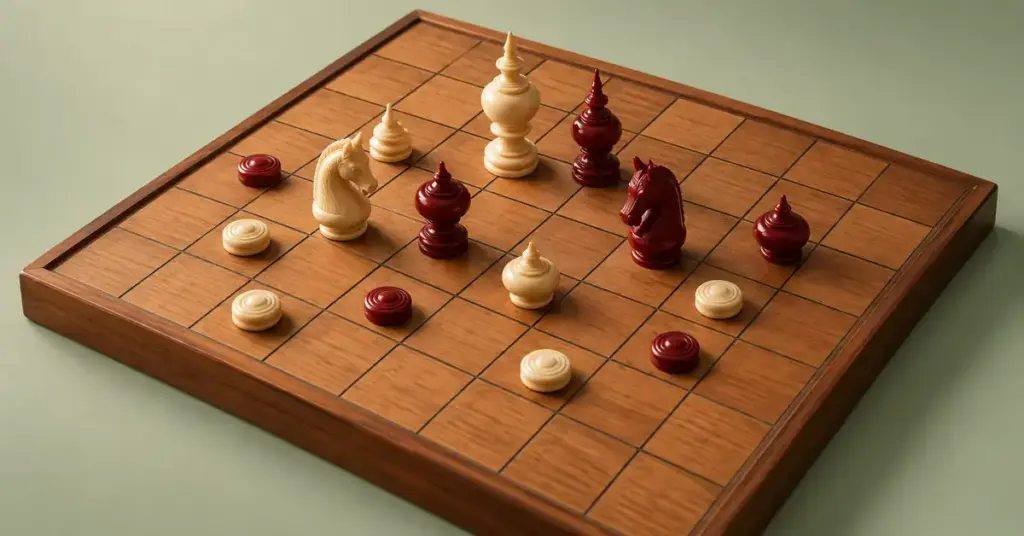
Searches for “Siam Spoon” bring together two ideas that sound intriguing: “Siam,” the historic name for Thailand, and the image of food and hospitality shared around a table. There is no established board or card game actually called “Siam Spoon,” but the phrase is a useful doorway into something very real — Thailand’s long and genuinely strategic tabletop tradition. This guide sets the record straight and then focuses on the games that matter, led by Makruk (Thai chess), alongside other traditional Thai strategy games and the modern abstract game simply called Siam. Everything below is written for New Zealand players who want accurate rules, honest context, and practical ways to play.
What “Siam Spoon” means — and what it doesn’t
“Siam” was the official name of Thailand until 1939 (and again briefly in the 1940s), and it still appears in the names of restaurants, products and cultural references around the world. Because of that, “Siam Spoon” is most often a brand or menu name rather than a game. It is not a recognised tabletop title, a game mechanic, or an organised movement in the New Zealand gaming scene.
What is real is Thailand’s rich heritage of strategy games. The best known is Makruk, a chess variant played daily across Thailand, but there are several others worth knowing. If you arrived here expecting a specific game, the sections below give you the genuine options — their rules, their history, and where Kiwi players can actually find and play them.
Key Points
- “Siam Spoon” is not a real game — “Siam” is the historic name for Thailand, and the phrase is usually a brand or menu name.
- The genuine Thai strategy classic is Makruk (Thai chess), a two-player game on an 8×8 board descended from the ancient game chaturanga.
- Makruk’s “queen” (Met) and “bishop” (Khon) are short-ranged, making the game slower and more positional than Western chess.
- Other traditional Thai games include Mak-yek (a rook-moving capture game) and len choa (an asymmetric hunt game).
- There is also a modern abstract board game named Siam (elephants vs rhinoceroses), playable free online.
- Kiwi players can learn Makruk and Siam online, or find strategy and abstract games through local board game cafés and hobby stores.
Makruk: Thailand’s own chess
Makruk (หมากรุก), often translated as “Thai chess,” is the centrepiece of Thai strategy gaming. It belongs to the same family as international chess, Chinese xiangqi and Japanese shogi — all descended from the ancient Indian game chaturanga. Makruk is widely regarded as one of the living games closest to that shared ancestor, which makes it genuinely interesting to anyone who already plays Western chess.
It is a two-player game on an 8×8 board of 64 squares. The pieces and the goal — checkmate the opposing king — will feel familiar, but several pieces move differently, and that changes the whole character of the game.
The pieces and how they move
Each side has one king, one “queen,” two “bishops,” two knights, two rooks and eight pawns. The Thai names and movements are:
| Piece (Thai name) | Meaning | How it moves |
|---|---|---|
| Khun (king) | “Lord” | One square in any direction. There is no castling. |
| Met (queen) | “Seed” | One square diagonally only — far weaker than the Western queen. |
| Khon (bishop) | “Nobleman” | One square diagonally in any direction, or one square straight forward. |
| Ma (knight) | “Horse” | The same L-shaped leap as the chess knight; the only piece that can jump over others. |
| Rua (rook) | “Boat” | Any number of squares forward, backward or sideways, like the chess rook. |
| Bia (pawn) | “Cowrie shell” | One square straight forward; captures one square diagonally forward. No two-square opening move. |
The standout difference is the Met. In international chess the queen is the most powerful piece; in Makruk she creeps one diagonal square at a time. Combined with the short-range Khon, this makes Makruk slower, more defensive and more about careful positioning than sweeping long-range attacks.
Setup and the object of the game
The back rows are arranged much as in chess, with rooks in the corners, then knights, then the Khon, and the Khun and Met side by side in the centre (the Met sits to the right of her Khun). The crucial difference is the pawns: they start already advanced on the third rank, so the two armies begin closer together. The aim is simply to checkmate the opponent’s Khun. A pawn that reaches the sixth rank (the opponent’s third rank) is promoted — it flips over to become a Bia Gai and from then on moves like the Met, one square diagonally.
The counting rules that decide endgames
Makruk does not use the familiar 50-move rule or threefold-repetition draw. Instead it has distinctive “counting” rules that force the stronger side to deliver checkmate within a limited number of moves, or settle for a draw. In simple terms, once the pawns are gone the defending player may begin counting moves aloud; if the attacker cannot checkmate within the allotted count, the game is drawn. The exact limit shrinks depending on how much material the attacker has left — two rooks allow very few moves, a lone bishop allows many more. These rules keep endgames sharp and reward a defender who knows them well, so they are worth learning before any serious game.
Makruk compared with Western chess
If you already play chess, the quickest way to understand Makruk is to look at what changes. The board, the knight and the rook are identical, but the queen, bishop, pawns and endgame rules are not. Those differences reward patience and coordination over raw attacking power.
Comparison
| Feature | Makruk (Thai chess) | International chess |
|---|---|---|
| Board | 8×8, 64 squares | 8×8, 64 squares |
| Players | 2 | 2 |
| Queen | Met — moves one square diagonally only | Moves any distance in straight lines and diagonals |
| Bishop | Khon — one square diagonally or one straight forward | Any distance diagonally |
| Pawns | Start on the 3rd rank; promote on the 6th rank to a Met-type piece | Start on the 2nd rank; promote on the 8th rank, usually to a queen |
| Opening move | Pawns move one square only (no two-square first move) | Pawns may advance two squares on their first move |
| Castling | None | Allowed |
| Draw rules | Distinctive “counting” rules limit the endgame | 50-move rule and threefold repetition |
| Overall feel | Slower, defensive, positional | Faster, sharper, long-range attacks |
Other traditional Thai strategy games
Makruk is not the only abstract game with Thai roots. Two others appear in collections of traditional South-East Asian games and are enjoying renewed interest through online abstract-game communities.
- Mak-yek: a two-player game played in Thailand and Myanmar. Pieces slide like a chess rook, and captures are made by “custodian” and “intervention” methods — trapping an enemy piece between two of your own, or moving between two enemy pieces. It is a pure abstract with no luck involved.
- Len choa: an asymmetric hunt game from southern Thailand, first documented by Captain James Low in 1839. One player controls a single tiger (or leopard) while the other controls a group of leopards; the hunter tries to capture enough prey to avoid being trapped, while the group tries to surround and immobilise it. Hunt games like this appear in many cultures and make a good, quick introduction to asymmetric strategy.
These games rarely appear in mainstream New Zealand shops, but their rules are freely documented and several can be played against a computer or other people through abstract-game websites.
“Siam” — the modern abstract board game

Separate from the traditional games, there is a contemporary two-player board game named simply Siam, designed by Didier Dhorbait and published by the French company Ferti Games. It is a tight abstract played on a 5×5 board: each player commands a herd of either elephants or rhinoceroses, and the goal is to be first to push a neutral “rock” off the board. A single animal can push one rock, while two animals facing the same way can shove two rocks together, and animals can also push one another — unless an opponent is pushing back from the other side. Each animal’s facing direction is shown by an arrow, so planning which way your pieces point is the heart of the game. A full game takes only a few minutes, which makes it a neat filler for a strategy evening. It can be played free online at Board Game Arena.
Playing Thai strategy games in New Zealand

You do not need to travel to Thailand to enjoy these games. The easiest starting point is online: Makruk is available on dedicated variant sites such as pychess.org, where you can play against a computer or other people and see the legal moves highlighted while you learn. The modern game Siam is on Board Game Arena, and abstract-game communities host rule sets for Mak-yek and len choa.
For in-person play, New Zealand has a healthy tabletop scene. Board game cafés and hobby stores in the main centres stock a wide range of abstract and strategy titles, and many run open game nights where you can try something new before buying. If you are building a collection, it helps to understand the wider world of strategy board games and how abstract games fit alongside heavier titles. Our overview of board games in New Zealand is a good place to see what local players favour, and if you enjoy clean, chess-like abstracts you may also like modern designs covered in our guide to the Azul board game. For the longer story of how games like Makruk connect to the global family of card and tabletop play, see our feature on the history of cards and games.
Hosting a Thai-themed game night

If the “Siam Spoon” idea appeals as a theme rather than a game, pairing Thai food with a strategy evening is a genuinely enjoyable way to host. The practical challenge is keeping boards and cards clean, since many games use cardstock that stains easily. A few simple habits make it work:
- Choose tidy food: dry, bite-sized dishes such as spring rolls or satay skewers are easier to eat between turns than saucy curries.
- Protect the table: use side plates, coasters and a separate snack table so drinks and oils stay well away from the play area.
- Sleeve your cards: plastic sleeves protect against spills and shuffling wear, which matters for games you play often.
- Match the game to the evening: a short abstract like Siam suits a relaxed dinner, while a full Makruk match rewards a quieter, more focused table.
Treat the theme honestly — as an atmosphere you are creating for friends, not as a branded “experience” — and it becomes a warm, low-pressure way to introduce people to games they would never otherwise try.
Sources
Frequently Asked Questions
Is “Siam Spoon” a real board game?
No. There is no recognised board or card game called “Siam Spoon.” The phrase combines “Siam,” the historic name for Thailand, with the idea of food and hospitality, and is usually a brand or restaurant name. Thailand’s genuine strategy games include Makruk (Thai chess), Mak-yek and len choa.
What is Makruk?
Makruk is Thai chess, a two-player strategy game on an 8×8 board. It descends from the same ancient Indian game, chaturanga, as international chess, but several pieces move differently — most notably the “queen” (Met), which moves only one diagonal square. This makes Makruk slower and more positional than Western chess.
How is Makruk different from international chess?
The board, knight and rook are the same, but the queen and bishop are much shorter-ranged, pawns start on the third rank and promote on the sixth rank, and endgames are governed by special “counting” rules rather than the 50-move rule. The result is a more defensive, patience-rewarding game.
Can I play these games online in New Zealand?
Yes. Makruk can be played on chess-variant sites such as pychess.org, and the modern abstract game Siam is available free on Board Game Arena. These platforms let you learn the rules and practise against a computer or other players before trying a physical set.
What is the modern game called “Siam”?
Siam is a two-player abstract board game by Didier Dhorbait, published by Ferti Games. Played on a 5×5 board, players control elephants or rhinoceroses and race to push a neutral rock off the board, using the direction each animal faces to out-manoeuvre their opponent. A game lasts only a few minutes.