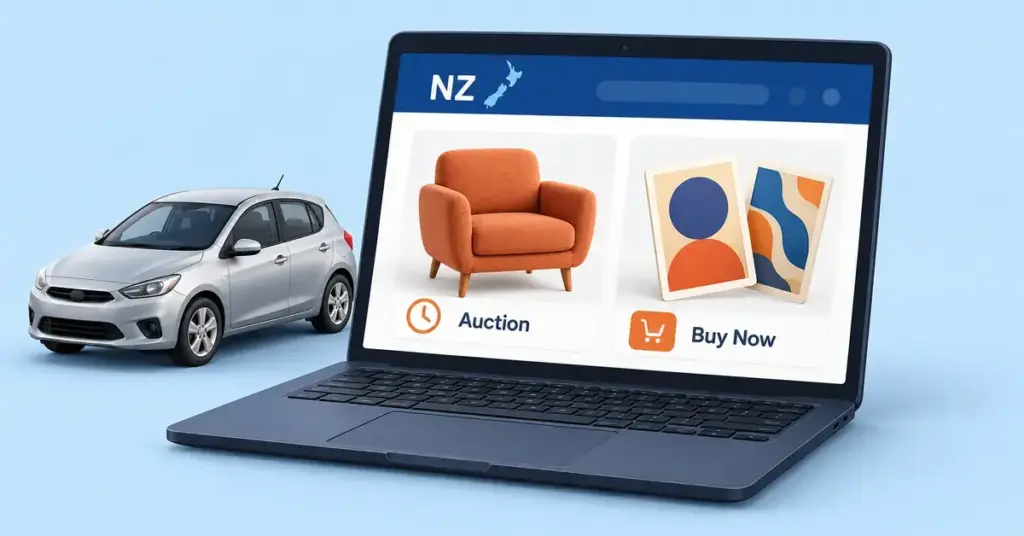
Trade Me is New Zealand’s best-known online marketplace, where everyday Kiwis and businesses buy and sell almost anything — from second-hand furniture and cars to rare collectibles and trading cards. It combines timed auctions, fixed-price ‘Buy Now’ listings and classified ads in one place, and its mix of local sellers, buyer feedback and growing payment protections makes it a practical first stop for both bargain hunters and collectors. This Trade Me NZ guide explains how the site works in 2026, what it costs, and how to trade on it safely.
Key Points
- What it is: New Zealand’s largest online marketplace — auctions, Buy Now and classifieds in one place.
- Founded: March 1999 by Sam Morgan; privately owned since the 2019 Apax Partners buyout.
- Account: free to join; verify your email, and enable two-factor authentication for security.
- Paying: Ping (primary) and Afterpay are covered by Buyer Protection up to NZ$5,000; cash is for in-person pickups only; bank transfer has been phased out.
- Selling: casual success fees removed from 10 March 2026; sellers pay a 2.19% Ping fee, while in-trade sellers still pay category success fees.
- Safety: keep deals on-platform, check seller feedback, and open a dispute within about 30 days if something goes wrong.
What Trade Me Is
Trade Me launched in March 1999, founded by New Zealander Sam Morgan, and grew quickly to become the country’s dominant online marketplace. It listed on the NZX stock exchange in 2011 and was taken private in 2019 when it was acquired by the global investment firm Apax Partners.
The platform spans dozens of categories, including Marketplace (general goods), Motors, Property and Jobs. Trade Me has reported several million active members — a large share of a national population of about 5.3 million — and its appeal rests on local trading: many deals are arranged between people in the same town, and public feedback ratings let members see a trader’s history before committing.

Setting Up Your Account
To use Trade Me you create a free account with your email address, name and a chosen username. During sign-up you add contact details such as a New Zealand address and phone number, which help keep accounts genuine and reachable.
After registering, you confirm your email by clicking the link Trade Me sends you. Some activities — such as selling or paying through the platform’s payment system — may require extra verification, like confirming a phone number or identity. Turning on two-factor authentication (a second login code sent to your phone or an app) adds a useful layer of account security.
How Buying Works
Anyone can browse Trade Me without an account, but you must be logged in to bid or buy. You can search by keyword or category and filter by price, condition, location and listing type.
There are two main ways to buy:
- Auctions: you place bids, and the highest bidder when the clock runs out wins. You can set a maximum ‘autobid’ and let the system bid up to that limit for you.
- Buy Now: a fixed price that lets you purchase immediately without waiting for an auction to end.
A watchlist lets you save listings and track their progress, and Trade Me’s internal messaging lets you ask the seller questions before you commit. Always read the full description, check the photos and review the seller’s feedback first.
Paying Safely
Trade Me has moved most transactions onto its own payment tools so that money and dispute records stay inside the platform. The main options in 2026 are:
- Ping: Trade Me’s integrated card-payment system and the primary way to pay. Paying with Ping keeps the transaction on-platform and makes you eligible for Buyer Protection.
- Afterpay: a buy-now-pay-later option that splits the cost into instalments; it is also covered by Buyer Protection.
- Cash: still allowed for in-person pickups, but cash deals are not covered by Buyer Protection.
Bank transfer has been phased out as a listed payment method. Trade Me’s Buyer Protection covers eligible purchases paid with Ping or Afterpay up to NZ$5,000 if an item never arrives or is significantly not as described — provided you have tried to resolve it with the seller and filed a report within the required window. Never send card or bank details through messages.
Selling on Trade Me
Any verified member can list an item. You choose the most accurate category, decide between an auction or a Buy Now price, upload clear photos and write an honest, detailed description. Accurate listings sell faster and lead to fewer disputes.
Once a listing is live you keep full control: you can answer buyer questions, edit details, end an auction early or relist items that didn’t sell. Prompt, clear communication protects the positive feedback rating that future buyers rely on. Businesses and high-volume sellers register as ‘in-trade’ sellers and are held to additional consumer-law obligations.
Trade Me Fees in 2026
Trade Me’s fee structure changed significantly in 2026, so older guides are no longer accurate. The headline change: from 10 March 2026, Trade Me removed the 7.9% success fee for casual sellers on Marketplace. Standard listings are generally free for casual sellers, with optional paid upgrades (such as featuring a listing) available.
The main costs today are the seller’s Ping transaction fee, a buyer service fee on casual purchases over NZ$20, and success fees that still apply to in-trade (business) sellers, charged as a percentage that varies by category. The box below summarises the current picture; always check Trade Me’s official fees page for the latest exact figures before listing.
Trade Me Fees at a Glance (2026)
| Fee | Who pays | Amount (2026) |
|---|---|---|
| Standard listing | Casual seller | Generally free (optional paid upgrades) |
| Success fee — casual | Casual seller | Removed from 10 March 2026 |
| Success fee — in-trade | Business seller | Tiered by category (roughly 5.9%–11.9%) |
| Ping transaction fee | Seller | 2.19% of item + shipping |
| Buyer service fee | Buyer | On casual purchases over NZ$20 (from about NZ$0.99) |
| Buyer Protection cover | Buyer | Up to NZ$5,000 (Ping or Afterpay) |
Buying and Selling Cards and Collectibles
Trade Me is one of the busiest places in New Zealand to buy and sell trading cards, booster boxes and collectibles, which is where it overlaps with the hobby side of the market. Listings for Pokémon trading cards, Magic: The Gathering singles and sports cards appear daily, alongside sealed product and vintage lots.
Because card values swing with condition and demand, a little homework pays off. It helps to understand how card grading works before bidding on “mint” singles, and to check recent sold prices using a reference like a card price-tracking tool so you don’t overpay in the heat of an auction. If you are new to the hobby, our guide to buying and collecting covers the basics, and beginners can start with the best trading card games for beginners. For high-value cards, pay through Ping so the purchase is covered by Buyer Protection.
Buying From Overseas Sellers
Trade Me is overwhelmingly a domestic marketplace, and the vast majority of listings are from sellers inside New Zealand. Some items ship from overseas, so before you bid, check the listed location, the stated shipping cost and delivery time, and any return terms. Imported goods may attract GST or duty on arrival, and overseas returns can be slow and costly. When a comparable item is available locally, buying from a New Zealand seller is usually faster and lower-risk.
Staying Safe and Avoiding Scams
Most Trade Me trades go smoothly, but a few habits keep you protected:
- Keep all contact and payment inside Trade Me’s messaging and payment tools — never move a deal to email, text or another app at a stranger’s request.
- Pay with Ping or Afterpay where possible so you qualify for Buyer Protection; treat requests to pay by direct bank transfer “to skip fees” as a red flag.
- Check the seller’s feedback and account history, and be wary of brand-new accounts selling high-value items.
- For in-person pickups, meet in a public place during the day and inspect the item before paying.
- If a deal feels too good to be true, walk away and report the listing to Trade Me.
Resolving Disputes
If an item arrives late, doesn’t arrive, or doesn’t match its description, start by messaging the seller — many problems are simple misunderstandings that are quickly fixed. If that fails and you paid with Ping or Afterpay, you can open a dispute through Trade Me within the required timeframe (generally 30 days of purchase) and, if eligible, claim under Buyer Protection. Trade Me’s Help Centre sets out the evidence and timelines needed, so keep your messages, receipts and tracking details.
Sources
Frequently Asked Questions (FAQ)
How do I create and verify an account on Trade Me NZ?
Register for free with your name, email, a username and New Zealand contact details, then click the confirmation link Trade Me emails you. Some actions, such as selling or paying on-platform, may require extra verification like a phone number or ID, and enabling two-factor authentication adds further security.
What fees do sellers pay on Trade Me in 2026?
From 10 March 2026, casual sellers no longer pay the old 7.9% success fee on Marketplace, and standard listings are generally free. Sellers still pay a Ping transaction fee of 2.19% on payments made through Ping, and in-trade (business) sellers continue to pay category-based success fees. Check Trade Me’s official fees page for exact current figures.
How do I pay safely on Trade Me?
Pay through Ping or Afterpay so the purchase is eligible for Buyer Protection, which covers qualifying Ping and Afterpay orders up to NZ$5,000. Bank transfer is no longer a listed option, and cash is allowed only for in-person pickups but is not protected. Never share card or bank details in messages.
Can I buy trading cards and collectibles on Trade Me?
Yes. Trade Me is one of New Zealand’s busiest marketplaces for Pokémon, Magic: The Gathering and sports cards, sealed product and vintage lots. Check condition and grading, compare recent sold prices, and pay with Ping on higher-value cards so Buyer Protection applies.
What should I do if there is a problem with my order?
Message the seller first, as many issues are resolved directly. If that doesn’t work and you paid with Ping or Afterpay, open a dispute through Trade Me within the required window (generally 30 days) and claim under Buyer Protection if eligible, keeping your messages, receipts and tracking as evidence.